Time Estimation Insights Professionals Learned From Their Own Mistakes
A practical look at time estimation through real mistakes, revealing the hidden work, delays, and patterns that shape project timelines and time management.
Time estimation is a major reason projects run late and teams feel overloaded. Tasks that look small often take more time than expected. Most estimates focus only on the visible work and ignore the clarifications, reviews, and interruptions that quietly add hours.
Accurate estimates improve planning and help teams balance workloads. They also make delivery more predictable. When people understand the real effort behind their tasks, they avoid overcommitting and reduce stress. This article explains the most common time estimation mistakes and the lessons teams learn from them.
What Is Time Estimation and Why It Matters
Time estimation is the process of predicting how long a task, milestone, or project phase will take. It considers the scope, complexity, and available resources to provide a realistic picture of the effort required.
A good estimate gives teams a realistic view of the effort required so they can plan, coordinate, and deliver work with greater accuracy.
Why accurate time estimation matters for professional work:
- It supports realistic schedule creation for teams, clients, and stakeholders
- It helps structure workload and avoid excessive commitments
- It improves planning accuracy for future projects
- It strengthens overall time management and reduces stress
- It avoids situations where teams rush near deadlines
- It makes time allocation more predictable
- It contributes to long term time optimization by highlighting recurring issues
Time Estimation in Project Management
In project management, time estimation acts as the foundation for building timelines, sequencing tasks, setting dependencies, and coordinating team capacity. It connects work scope with resource availability, allowing managers to create realistic execution plans.
Good time estimation directly impacts:
- Critical path accuracy
- Resource planning and allocation
- Stakeholder expectations
- Budget and cost forecasts
- Task sequencing and dependency planning
Poor time estimation causes delays, budget overruns, and misaligned workloads. By contrast, accurate estimation helps project managers shape predictable delivery cycles and avoid last-minute crises.
Estimated Time vs Planned Time vs Scheduled Time
Estimated time predicts how long the work should take. Planned time defines how much time the team will allocate based on priorities and capacity. Scheduled time sets the exact dates and hours when the work will actually occur.
| Term | What It Means | Purpose | Example |
|---|---|---|---|
| Estimated Time | The predicted amount of time required to complete a task based on scope, complexity, and past experience. | Helps determine realistic effort and expected duration. | “Writing the proposal should take about 4 hours.” |
| Planned Time | The amount of time the team decides to allocate based on priorities, constraints, and capacity. | Ensures workload fits within available resources. | “We’ll allocate 6 hours this week for the proposal.” |
| Scheduled Time | The specific date and time when the task will actually be worked on. | Turns planning into a concrete calendar timeline. | “Thursday 9–12 and Friday 2–3 are reserved for this task.” |
Insights Learned from Time Estimation Mistakes
Here are the insights, or the lessons learned from the mistakes that even seasoned professionals across various industries make.
Hidden Work Is the Silent Killer of Estimates
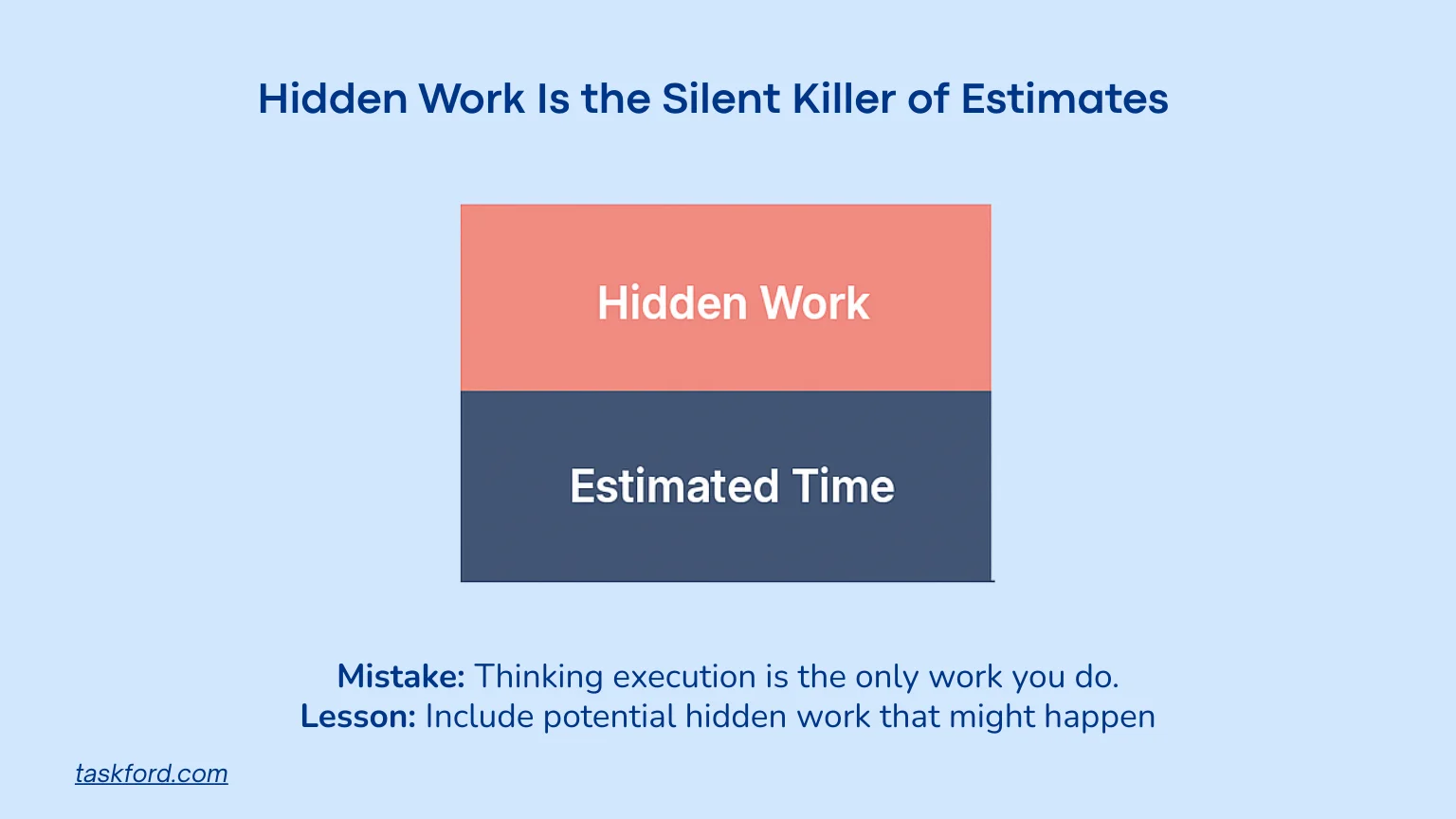
A project manager once estimated a two week delivery based solely on execution activities. She counted development hours, mapped the tasks, and assigned resources. What she did not consider was the time required for requirement clarifications, internal alignment, review rounds, and approval loops. These invisible layers of work accumulated until they became nearly half of the total timeline and caused the project to finish far later than expected.
- Mistake: She treated execution as the entire workload. She ignored coordination, clarification, and review cycles that expand real effort.
- Lesson: Time estimation improves when hidden work is acknowledged. Teams produce more accurate predictions when they map the full chain of supporting tasks instead of focusing only on visible steps.
Familiar Work Is Still Unpredictable
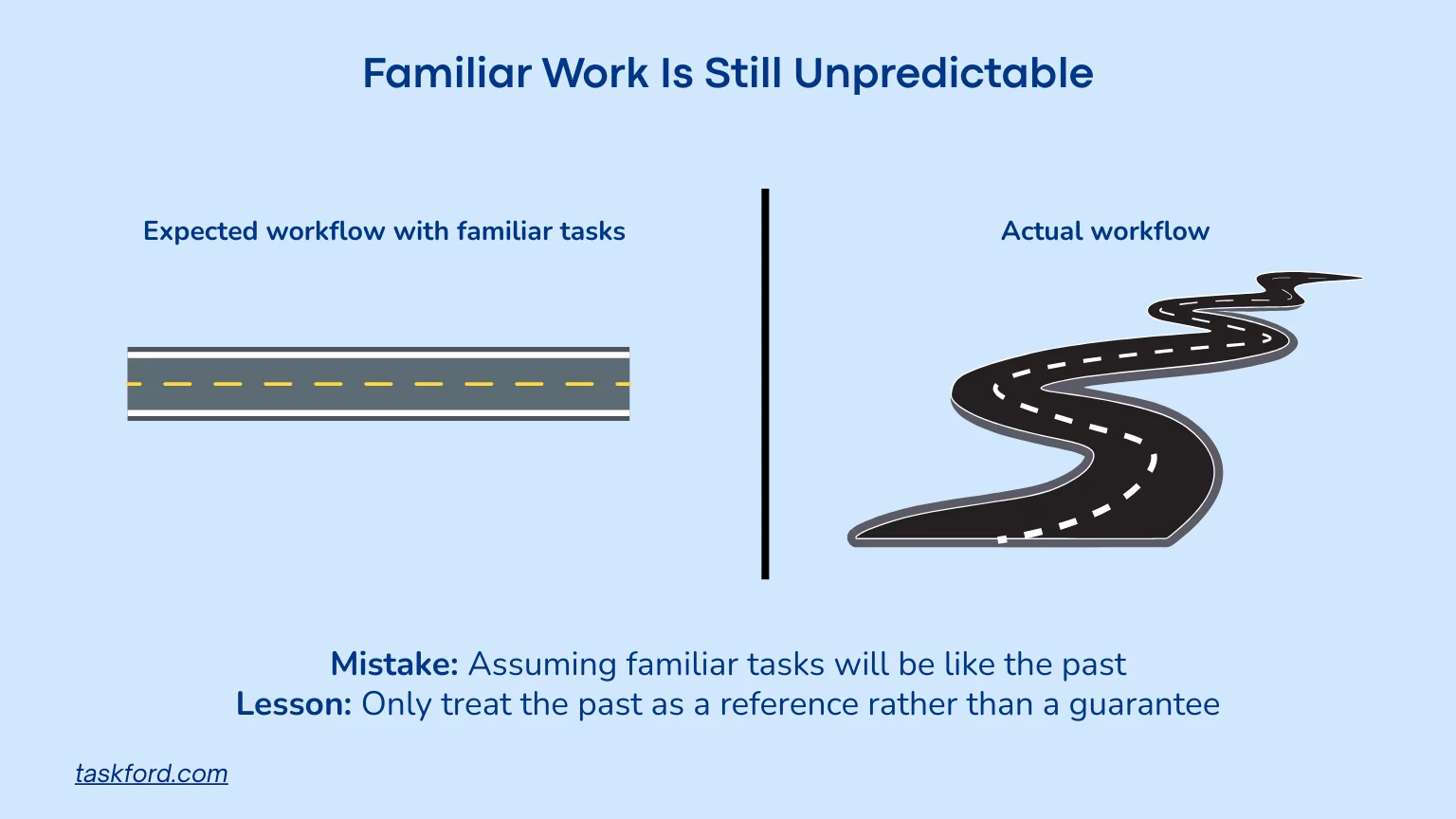
A designer agreed to update an interface that he had revised many times in the past. Confident from experience, he estimated the work would take two hours. Once he started, he discovered new branding rules, updated spacing guidelines, and revised accessibility standards. What he expected to be a routine refresh became a detailed adjustment session that took far longer than planned.
- Mistake: He assumed past familiarity meant present predictability. He ignored how new constraints can reshape the process.
- Lesson: Even familiar work contains variance. Time estimation becomes more reliable when past experience is treated as a reference rather than a guarantee.
Work from Other Teams Stretch Timelines More Than Anyone Expects
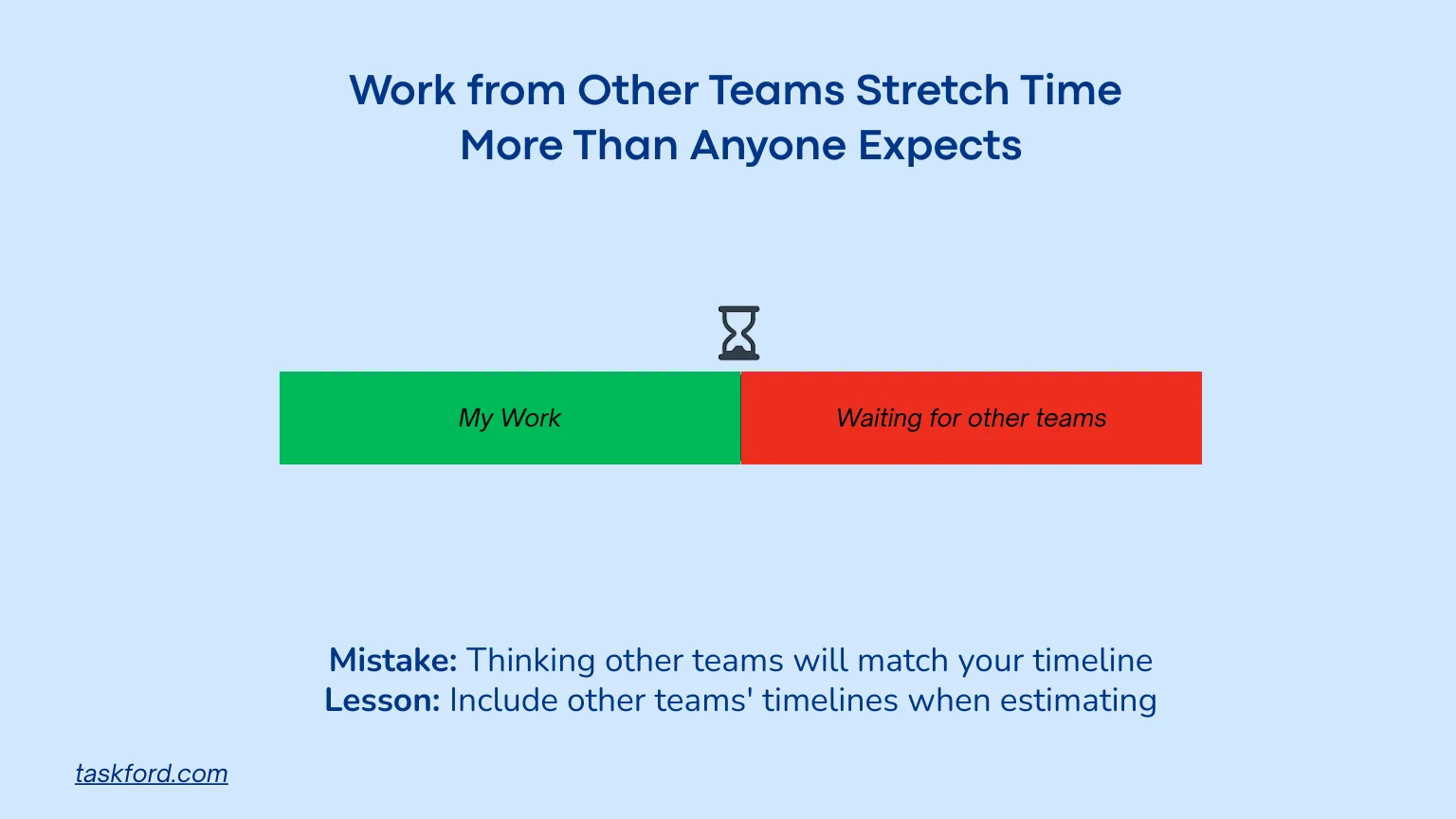
A software engineer planned a three day update that required a small API change handled by another team. His own development work took only two days. However, the dependency consumed nearly a week because the other team was managing multiple priorities. The waiting period created a large gap between his estimation and the actual delivery.
- Mistake: He treated cross team timelines as if they were perfectly aligned with his own. He assumed availability and priority would match his expectations.
- Lesson: Dependencies frequently become the longest part of a timeline. Effective time estimation must include response time, queue positions, and review cycles across teams.
Small Interruptions Can Break an Entire Day
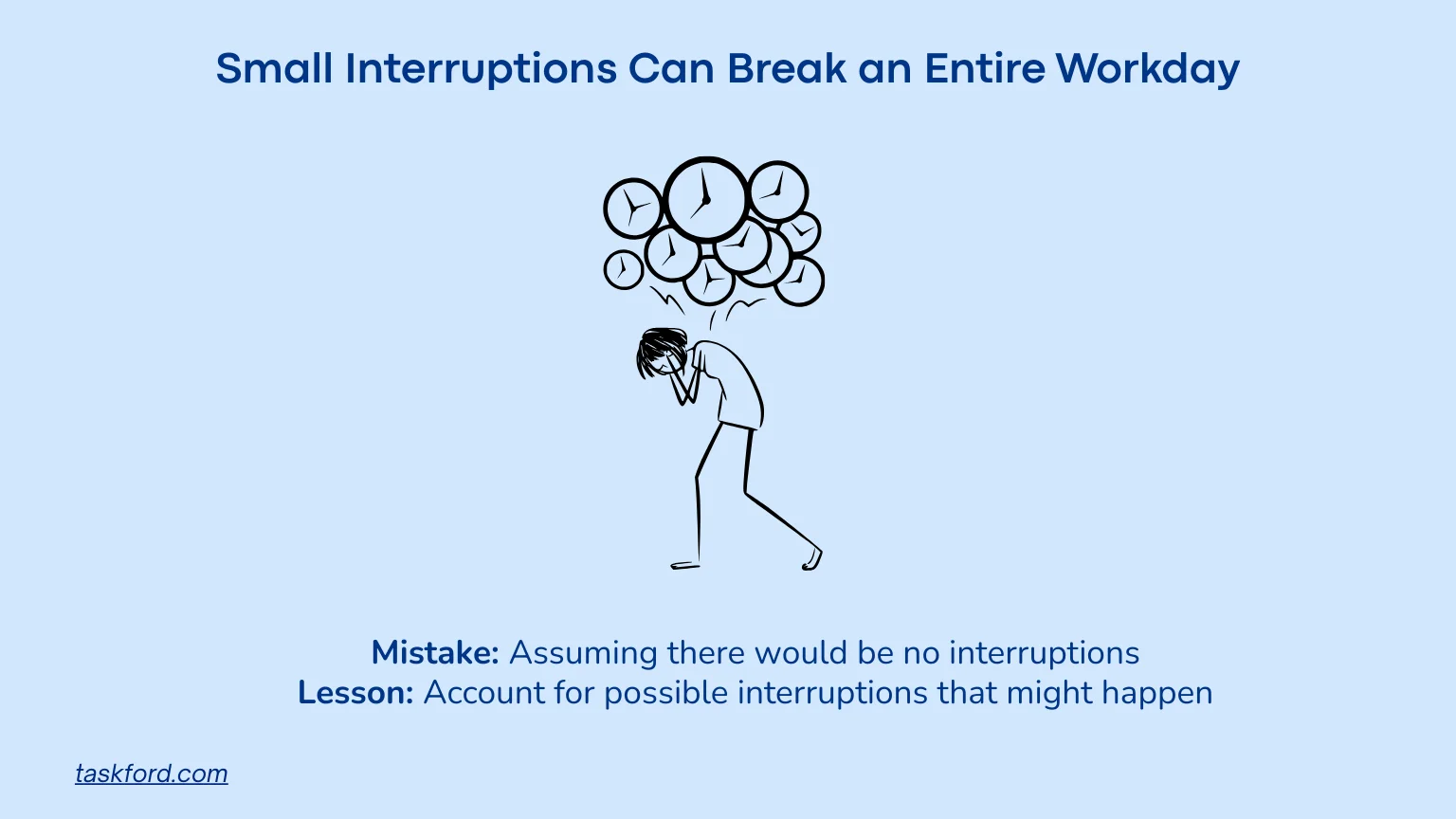
A marketing lead set aside a quiet morning to complete a set of content drafts. She turned off notifications but still received small urgent requests, questions from teammates, and messages asking for quick decisions. Each interruption was brief, yet the time required to rebuild focus made the workday feel scattered. Her planned four hour task ended up spreading across the entire day.
- Mistake: She assumed a scheduled time block meant an uninterrupted time block. She underestimated the cost of context switching.
- Lesson: Interruptions redistribute the entire structure of a workday. Time estimation becomes more accurate when people account for regained focus time, minor requests, and realistic interruptions.
Revisions Frequently Take Longer Than the Original Task
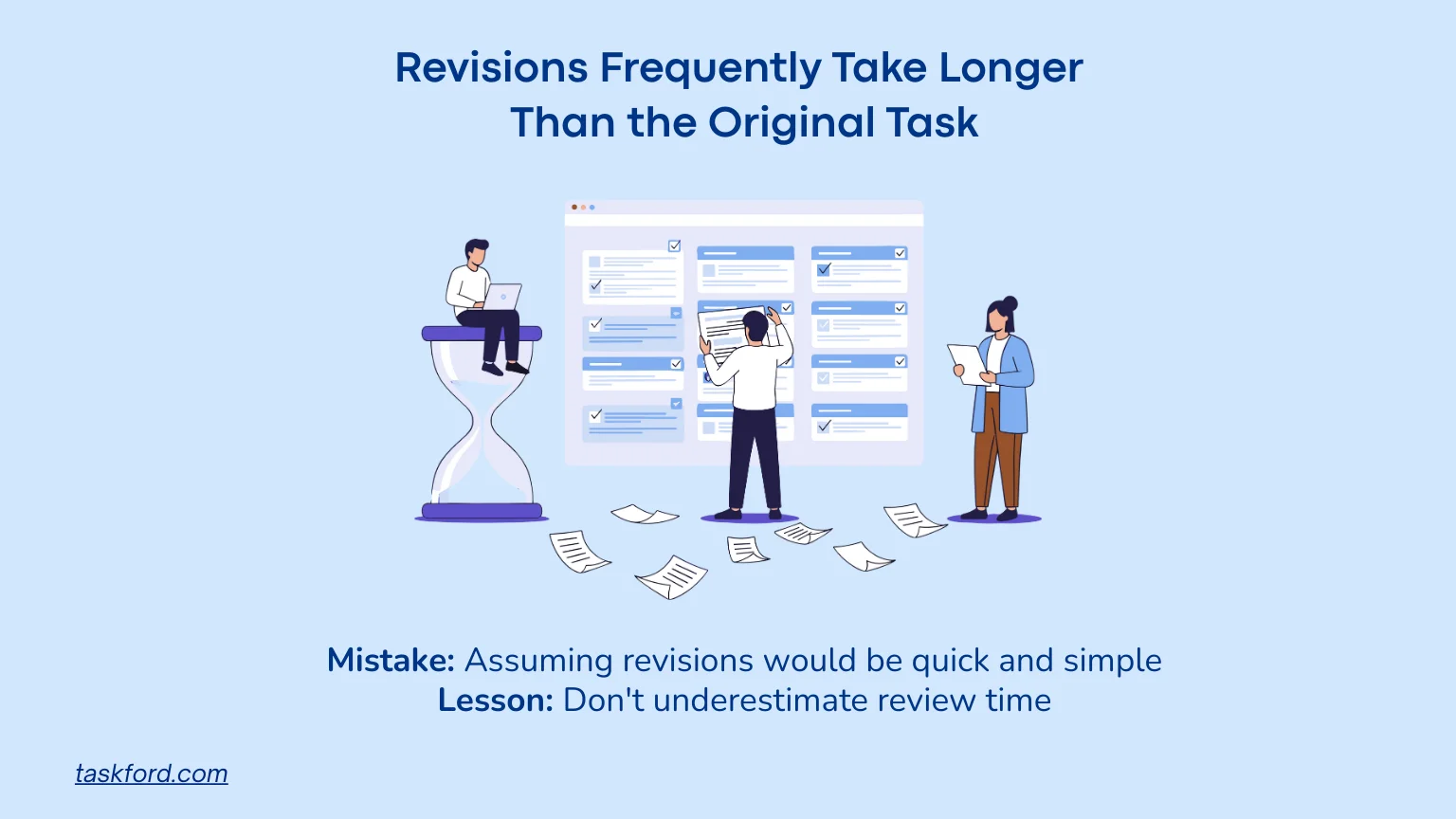
A content creator wrote the first version of a presentation deck in a short amount of time. However, the review cycle demanded multiple rounds of edits, reformatting, clarifications, and style adjustments. By the end of the process, the revisions consumed more hours than the initial creation.
- Mistake: He believed the initial creation represented the majority of the work. He assumed revisions would be quick and simple.
- Lesson: Revisions often take longer than expected and sometimes exceed the effort required for the first version. Time estimation improves when review cycles are treated as full work phases instead of minor steps.
Time Estimation Framework Professionals Must Always Consider
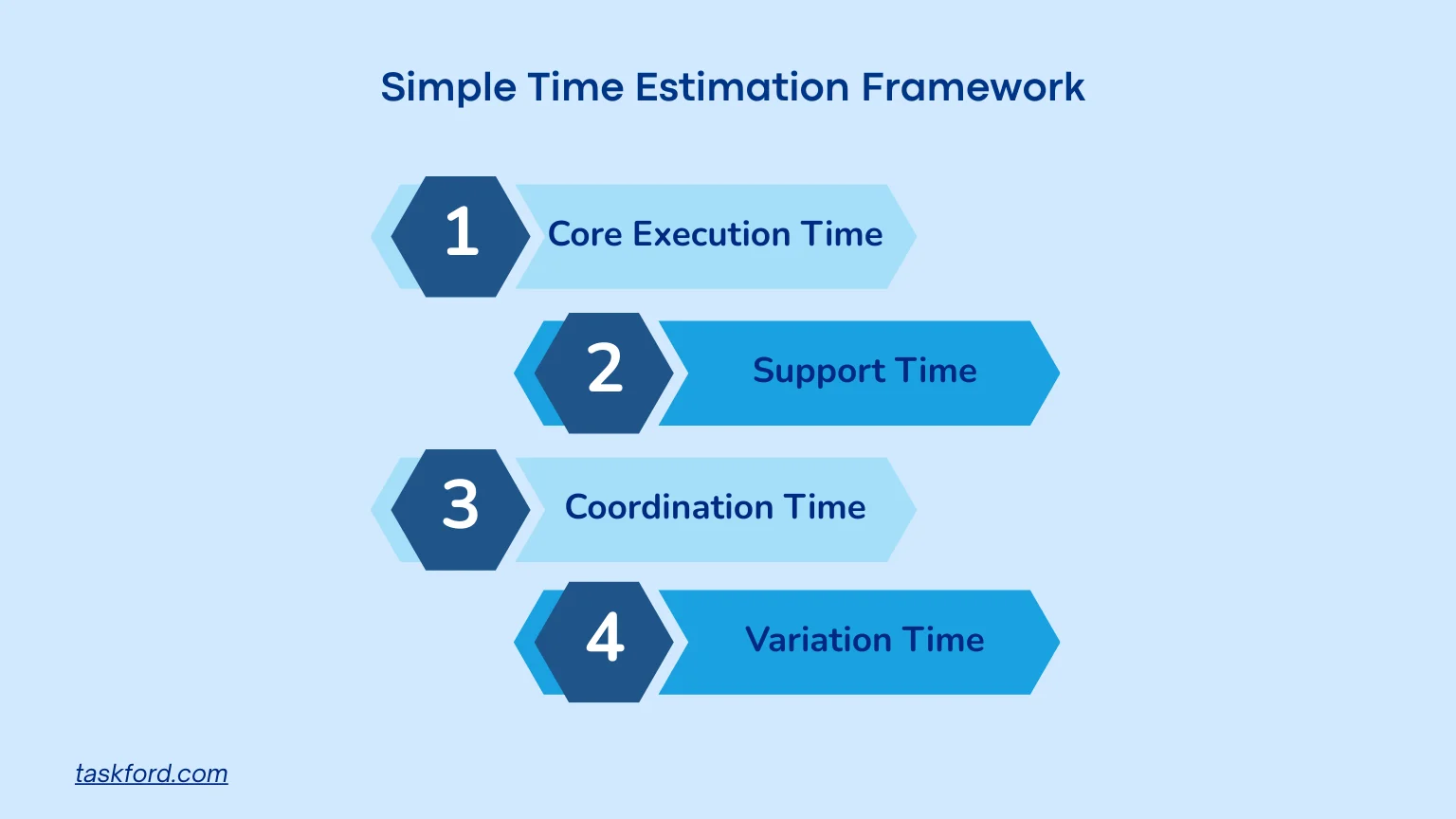
Professionals should always consider these 4 layers when doing time estimation:
1. Core Execution Time: The hours required to actually do the work, such as writing, designing, coding, building, analyzing.
2. Support Time: Tasks that indirectly support execution, including preparation, documentation, versioning, file setup, clean-up.
3. Coordination Time: Meetings, clarifications, approvals, cross-functional reviews, feedback loops.
4. Variation Time: Buffers for interruptions, uncertainties, dependencies, and unexpected changes.
Most estimation mistakes happen because teams only calculate Layer 1, but real work spans all four layers. This framework helps individuals and teams view tasks more realistically and estimate with fewer blind spots.
How Professionals Can Improve Time Estimation Through Practice
Improving time estimation is not about finding a perfect prediction method. It is about practicing specific habits that help remove blind spots. These habits reveal patterns, increase clarity, and make individuals more aware of how real work unfolds.
Practice 1: Break Work Into Smaller, Clearer Components
Small components are easier to estimate than large ones. This method reduces uncertainty and creates clearer visibility into each part of the work.
Practical steps:
- Divide tasks into execution work, communication work, and support work
- Identify micro steps such as file preparation, documentation, and small checks
- Separate each activity into its own line item rather than grouping them
- Add checkpoints that signal when work transitions into a new stage
This practice strengthens time management and reduces overconfidence in broad estimations.
Practice 2: Add Variation Buffers Based on Past Patterns
Variation is unavoidable. Buffers help account for unpredictability without inflating timelines unnecessarily.
How to apply buffers correctly:
- Compare estimated time with actual time after each task
- Calculate typical ranges of variance
- Apply percentage based buffers to similar future tasks
- Adjust buffer size depending on team capacity and workload complexity
This habit creates a more realistic view of how work behaves across different scenarios and supports better time allocation.
Practice 3: Track Personal or Team Estimation Accuracy
Patterns emerge only when accuracy is measured. Regular tracking reveals where people consistently underestimate and why.
Tracking ideas:
- Maintain a simple log of estimated versus actual hours
- Highlight tasks with the largest time gaps
- Capture short notes on what caused delays
- Review patterns weekly or biweekly to recalibrate future estimates
Consistent tracking becomes a major driver of time optimization because it links experience with actionable improvement.
Practice 4: Account for Interruptions and Context Switching
Interruptions are a normal part of modern work. Estimations that ignore them become inaccurate.
Ways to manage interruptions:
- Allocate a portion of daily hours specifically for unexpected tasks
- Group similar shallow tasks into batches to reduce context switching
- Protect deep work hours with clear boundaries
- Analyze timelogs to find recurring interruption sources
This practice improves both time management and the accuracy of future estimations.
How TaskFord Helps Teams Improve Time Estimation
TaskFord, an integrated work delivery platform, is also built to help teams understand how work unfolds, where time goes, and what factors affect delivery. Instead of relying on vague intuition, teams gain clear data that supports better decisions.
TaskFord supports better time estimation through:
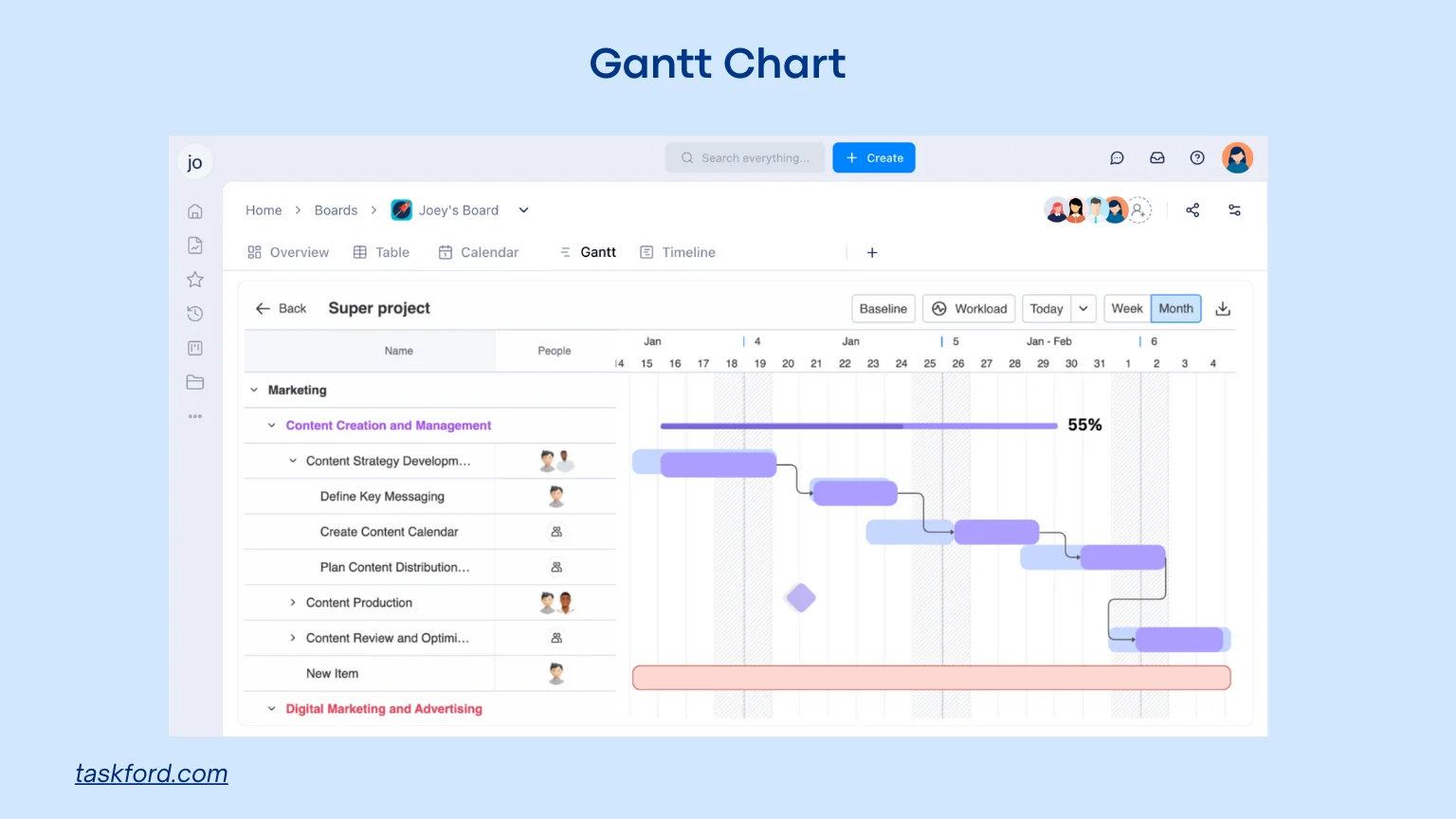
- Kanban and Gantt views that reveal where tasks get stuck
- Time logs that show actual time that is spent on a task for accurate tracking.
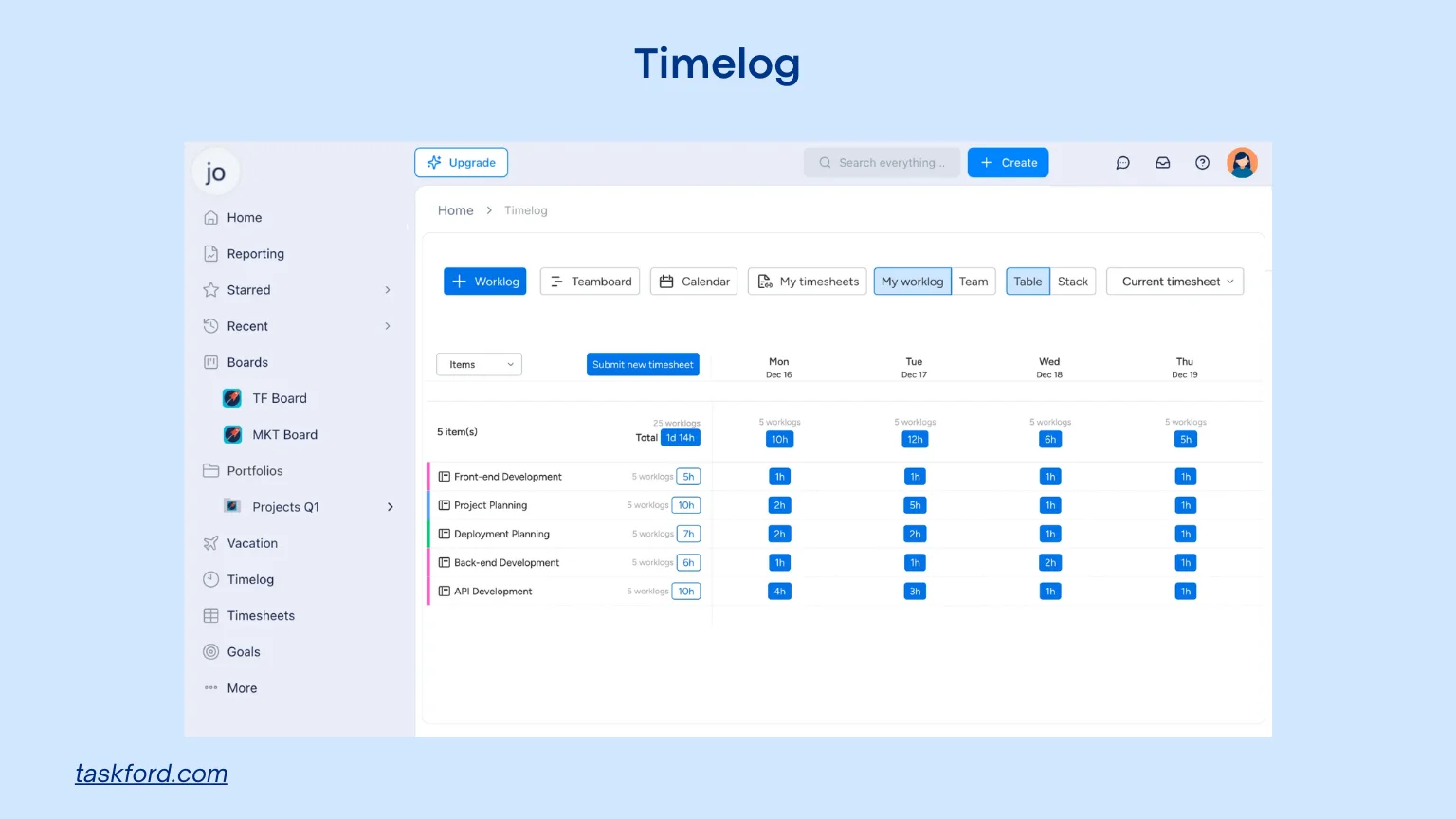
- Real data that exposes the gap between estimated and actual hours
- Visual structure that makes interruptions, handoffs, and rework noticeable
- Workload planning tool that reveals how each team member’s time is allocated
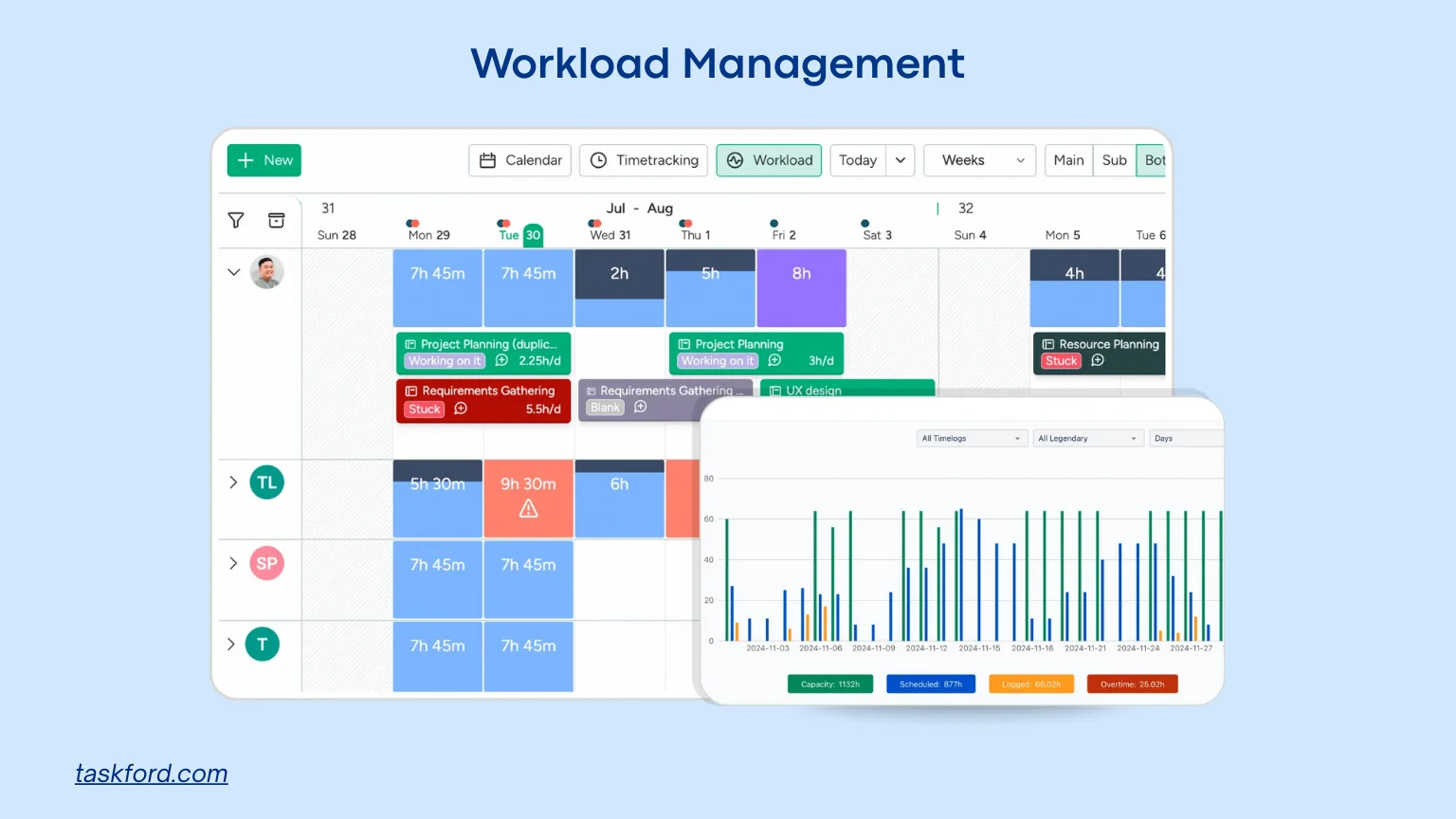
With these capabilities, TaskFord becomes a valuable partner for professionals who want to estimate with confidence instead of guesswork. It helps prevent repeated mistakes, improves workload planning, and strengthens overall time management.
Conclusion
Effective time estimation becomes easier when professionals recognize the hidden factors that shape real work, such as coordination, interruptions, and revision cycles. When these elements are accounted for, estimates shift from guesses to informed predictions.
Improving estimation is an ongoing practice built on clear task breakdowns, consistent tracking, and adjusting assumptions as patterns become visible. Tools like TaskFord strengthen this process by turning daily work activity into usable data. With better habits and better systems, teams achieve stronger time management, more accurate time allocation, and more intentional time optimization.
Learn more
- Recurring Tasks: What are they and How to Automate Your Work.
- Project Time Tracking: 5 Myths About Time Tracking That Are Holding Your Projects Back.
- Time Tracking on Tasks Project Management that Lead Better Results.
Subscribe for Expert Tips
Unlock expert insights and stay ahead with TaskFord. Sign up now to receive valuable tips, strategies, and updates directly in your inbox.