The Art of Task Prioritization: How Leaders Guide Teams with Purpose
Learn how leaders use task prioritization to set clear focus, align teams, and manage work effectively with simple principles and practical frameworks.
Teams often manage multiple tasks simultaneously, and without clear direction, it can be challenging to determine which tasks deserve attention first. Task prioritization helps bring that clarity by showing the team which tasks matter most.
For leaders, guiding priorities is about setting focus and guiding the team toward the work that supports shared goals. Clear priorities reduce confusion, support better planning, and help the team use their time and energy well. This guide walks through how leaders use task prioritization to keep their teams aligned and moving in the right direction.
Understanding Task Prioritization in a Leader’s World
What is Task Prioritization?
Task prioritization is the process of deciding which tasks should be completed first based on their importance, impact, and timing. It helps teams focus on the work that supports key goals rather than treating every task as equal.
For leaders, task prioritization also means giving the team clear direction. Instead of leaving people to guess what matters most, leaders set an order of focus so the team can use their time and energy wisely. This creates a shared understanding of what needs attention now, what can wait, and what may not be necessary at all.
Why Task Prioritization Matters for Leaders
Leaders often face numerous requests from various directions. Without clear priorities, teams may focus on tasks that feel urgent rather than tasks that actually move the work forward. Task prioritization helps leaders show the team what should come first and why.
Clear priorities also prevent overload. When the team understands which tasks matter most, they can plan their work better and avoid unnecessary stress. It also supports smoother coordination across departments, especially when different teams depend on each other. With steady, well-communicated priorities, leaders help their teams stay focused, aligned, and consistent in their progress.
Why Traditional Task Management Fails?
Traditional task management often focuses on creating long lists and checking items off one by one. While this works for basic personal tasks, it doesn’t match the needs of a team. These lists don’t show which tasks have higher value, which depend on others, or which ones support bigger goals.
Another problem is that static lists don’t change as work changes. Priorities shift, new tasks appear, and deadlines move, but a simple list stays the same. This can lead teams to spend time on the wrong things or spread their effort too thin.
Because of these limitations, teams need more than a list. They need clear priorities, shared understanding, and guidance on what deserves attention first. This is where a more thoughtful approach to managing work becomes essential.
Read also: What is Task Management? A Simple Framework to Get Your Tasks Under Control
Core Principles of Effective Prioritization
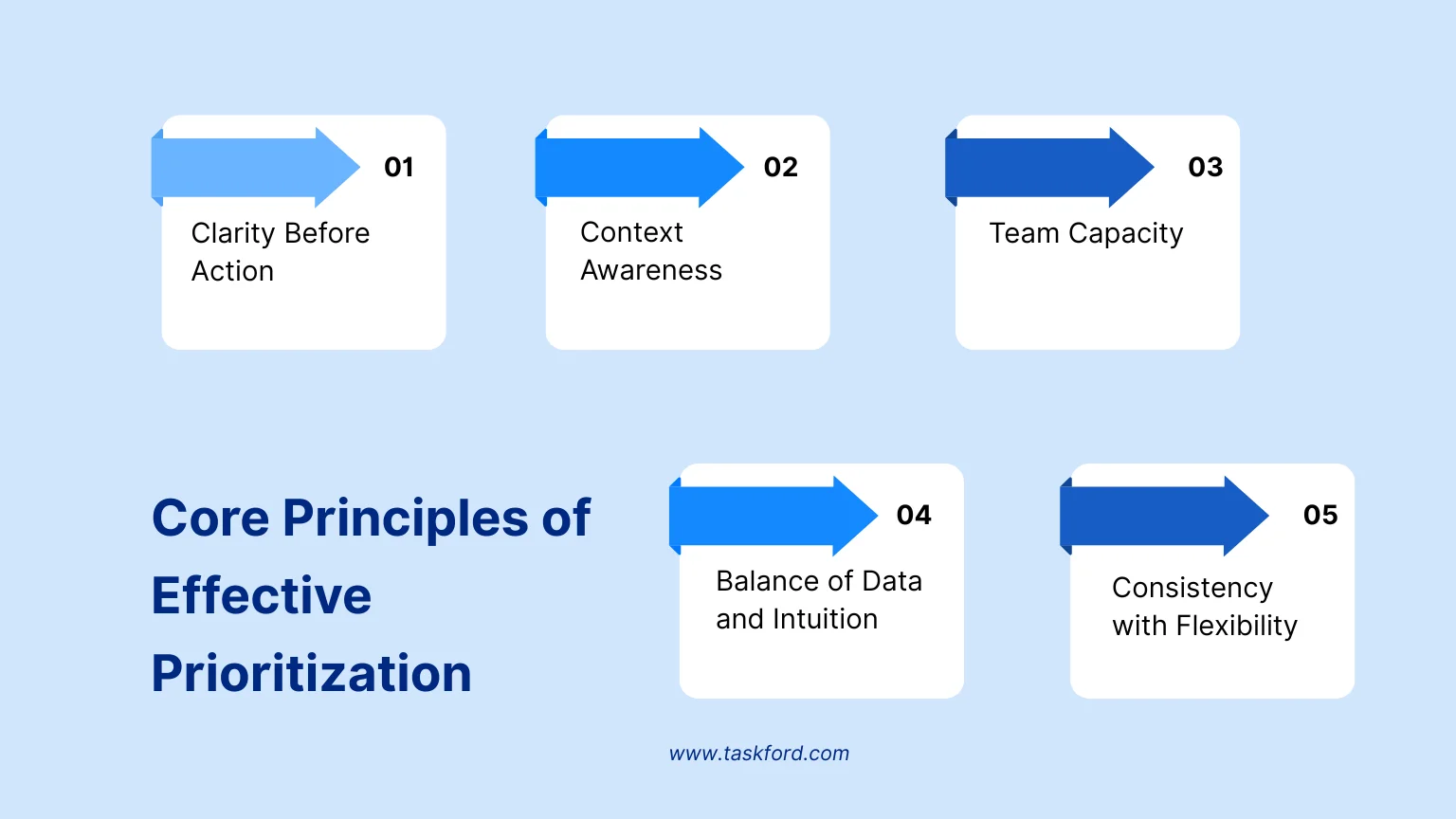
- Clarity Before Action Prioritization starts with clearly defined goals. When the team understands the purpose behind the work, it’s easier to identify which tasks support those goals and which can wait.
- Context Awareness Tasks should be viewed in context—not just by urgency, but also impact, timing, and dependencies. This helps leaders focus on work that moves projects forward rather than reacting to every request.
- Team Capacity A priority only works if the team has the time and skills to handle it. Leaders consider workload, availability, and strengths to keep work realistic and balanced.
- Balance of Data and Intuition Leaders rely on both information and experience. Data helps compare tasks objectively, while intuition and team insights guide decisions when situations are less clear.
- Consistency with Flexibility Priorities should be steady enough to give focus but flexible enough to adjust when conditions change. Clear communication ensures the team stays aligned when updates are needed.
The Leadership Lens: What Truly Drives Priority
Leaders look at more than just a list of tasks. They consider several factors that help them decide what should come first and what can wait.
- Purpose Alignment Tasks that support key goals or expected outcomes naturally rise to the top. Leaders check whether each task contributes to what the team is trying to achieve.
- Impact and Effort Some tasks create more value with less effort, while others require significant time for smaller gains. Leaders weigh both to choose work that moves projects forward efficiently.
- Dependencies and Risk A task might unlock other work or help avoid delays later. Leaders review what depends on what, and which tasks must be handled early to reduce risks.
- Team Health Workload, energy levels, and stress also shape priorities. A task may need to wait if the team is stretched too thin. Leaders consider what’s realistic and sustainable.
- Timing and Opportunity Certain tasks are more valuable at specific moments—such as preparing before a product launch or responding to a customer need. Leaders adjust priorities to match the timing of these opportunities.
By considering these factors together, leaders create priorities that support both the work and the people doing it.
Task Prioritization Frameworks Leaders Use
Leaders often use simple and proven frameworks to bring structure to decision-making. These frameworks help teams compare tasks fairly, understand why certain items come first, and stay aligned even when workloads shift. Below are some of the most common tools leaders rely on.
MoSCoW Method
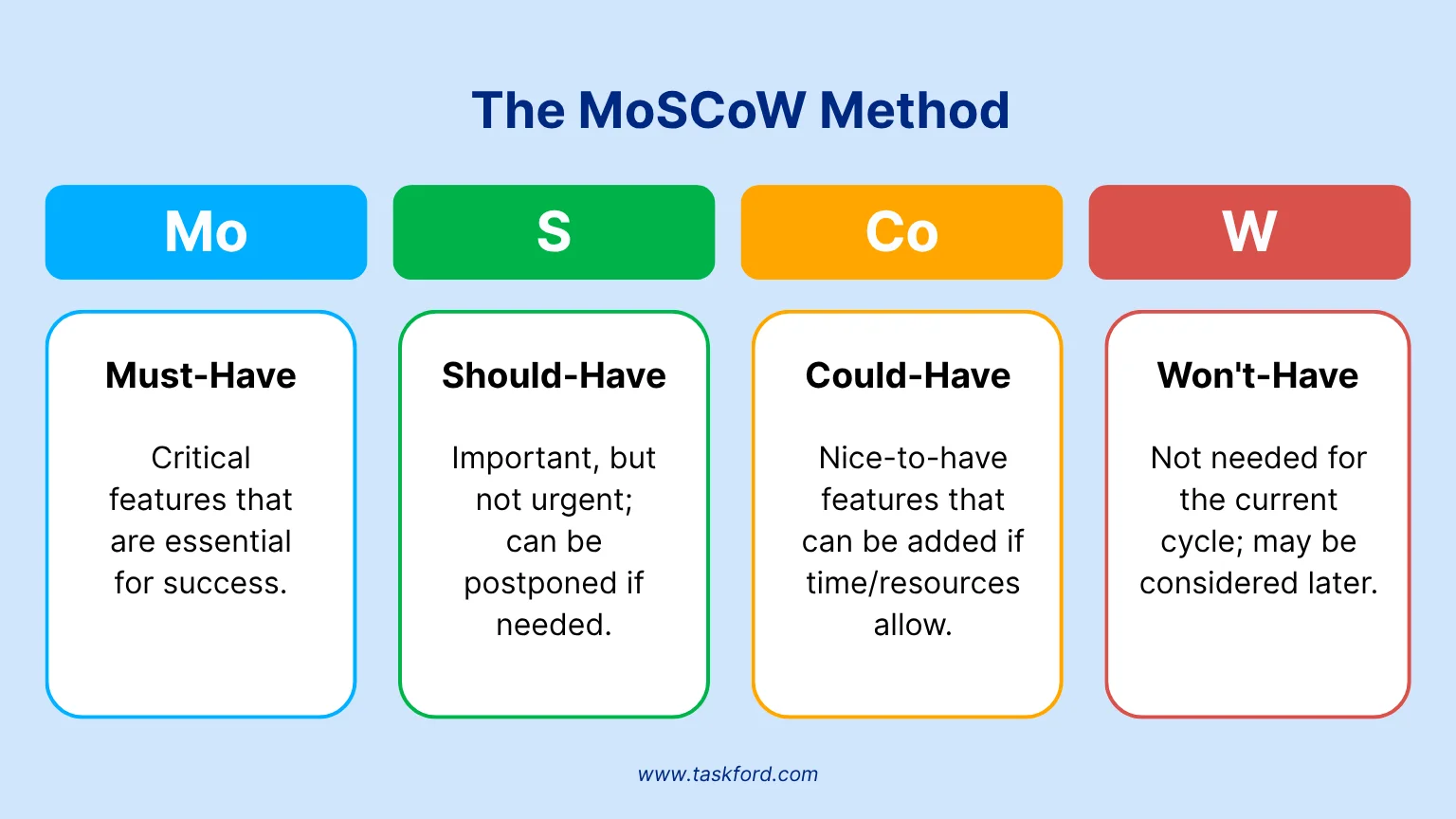
The MoSCoW Prioritization method groups tasks into four categories: must-have, should-have, could-have, and won’t-have for now. This approach helps teams separate essential work from supportive or optional tasks. It’s especially useful during planning sessions when teams need to agree on what absolutely needs to be completed.
Value vs. Effort Matrix
This matrix plots tasks based on how much value they bring compared to the effort required. It’s a quick way to identify high-impact tasks, uncover low-value work, and spot activities that may not be worth the time. Leaders often use it to support discussions about where to invest team energy.
Eisenhower Matrix
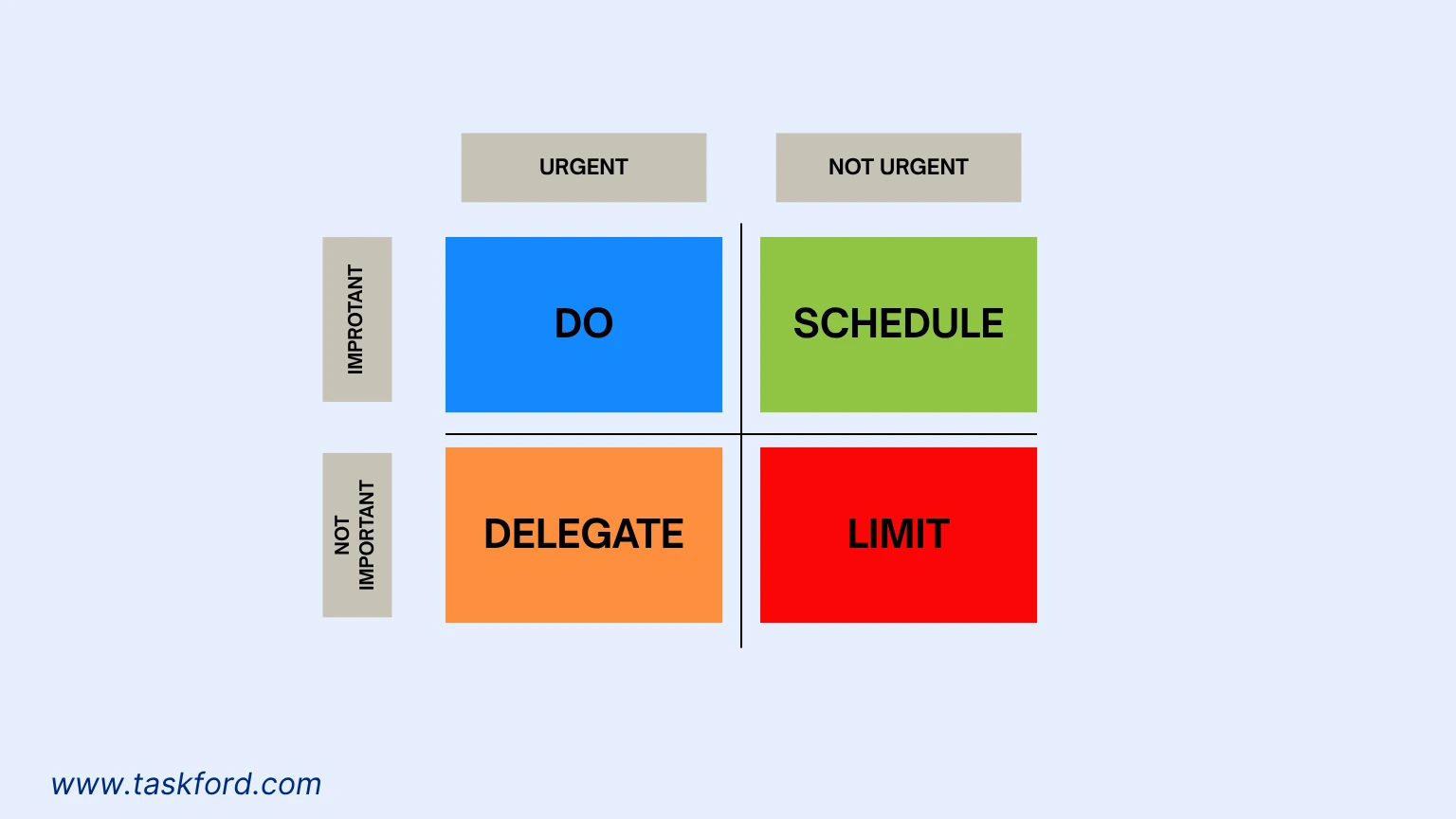
The Eisenhower Matrix separates tasks into four groups: urgent and important, important but not urgent, urgent but less important, and tasks that can be removed. This framework helps teams avoid spending most of their time in “urgent mode” and encourages more focus on long-term, meaningful work.
RICE Scoring
RICE Scoring stands for Reach, Impact, Confidence, and Effort. By assigning a score to each task, leaders can compare priorities more objectively. This method is helpful when dealing with many competing tasks or when teams need a clear, data-supported reason for choosing one task over another.

Priority Pyramid
This simple visual tool organizes tasks into three levels: critical tasks at the top, supporting tasks in the middle, and optional or low-impact tasks at the bottom. The pyramid helps teams quickly understand where to direct their focus and which tasks can be paused without affecting progress.
By using these frameworks, leaders create a consistent and transparent process for prioritizing work. This reduces guesswork, supports better conversations, and helps teams stay coordinated as they move through changing workloads and deadlines.
How Leaders Turn Priorities Into Team Alignment
Setting priorities is one part of a leader’s job; turning those priorities into shared action is another. Alignment happens when everyone understands the plan, why it matters, and how their work contributes to it. Leaders use several simple practices to help teams stay on the same page.
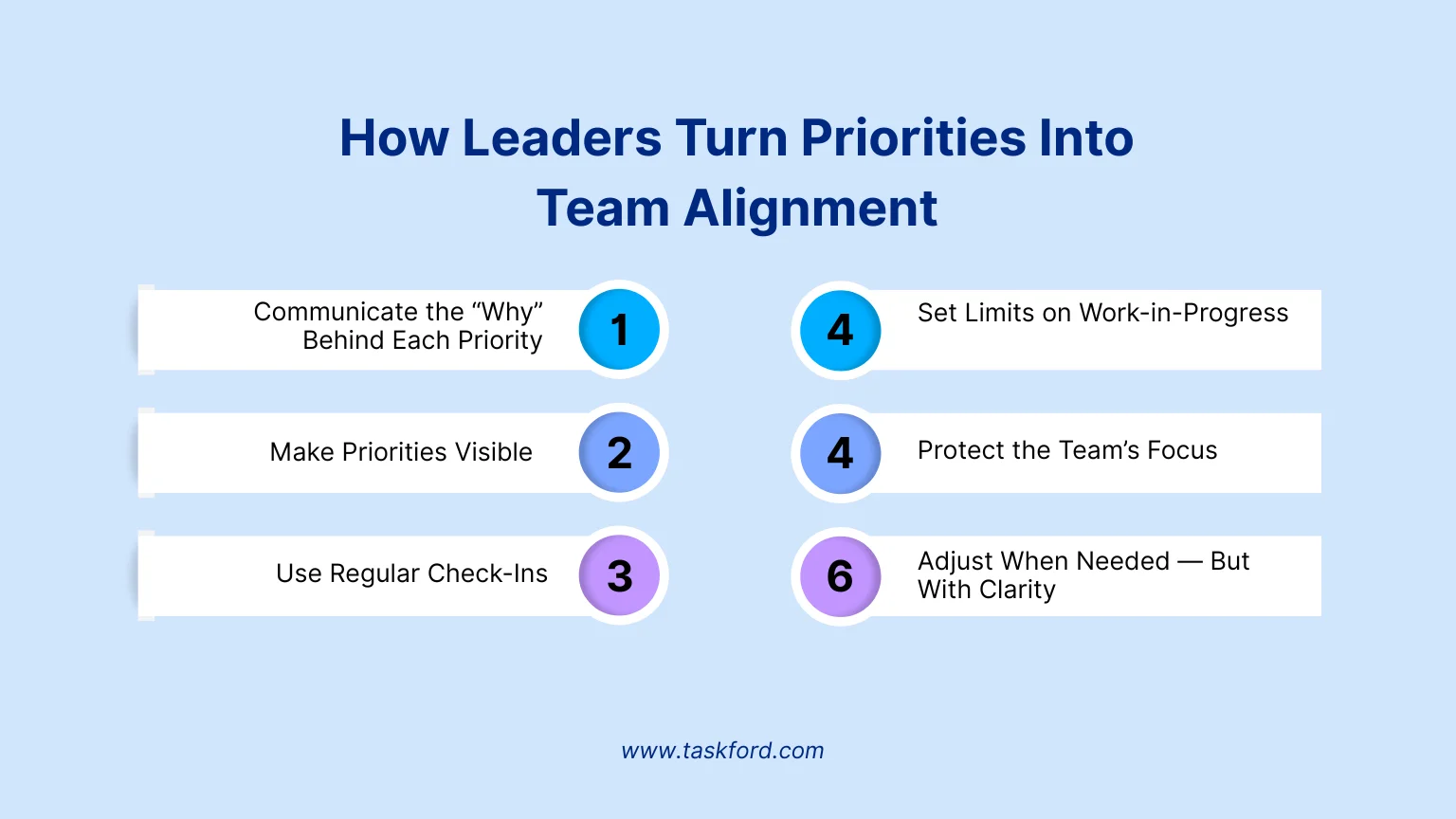
1. Communicate the “Why” Behind Each Priority
Teams work with more clarity when they understand the reason behind a task. A quick explanation, even a few sentences, helps people see the purpose, make better decisions, and stay motivated.
2. Make Priorities Visible
Shared tools, boards, or dashboards give everyone a clear view of what comes first. When priorities are visible, the team doesn’t have to guess or wait for updates. It also helps reduce duplicate work and keeps conversations focused.
3. Use Regular Check-Ins
Short, consistent check-ins—such as weekly reviews or sprint planning sessions—help confirm that priorities still make sense. These moments give the team space to raise concerns, adjust timelines, or reallocate work as needed.
4. Set Limits on Work-in-Progress
When teams take on too many tasks at once, progress slows down. Leaders help maintain focus by limiting ongoing work, which allows the team to finish important tasks faster and with better quality.
5. Protect the Team’s Focus
Requests and new ideas will always come in, but not all of them require immediate action. Leaders act as a filter by deciding what needs attention now and what can wait. This protects the team from unnecessary interruptions and keeps attention on the current priorities.
6. Adjust When Needed—But With Clarity
Priorities may change, and that’s normal. What matters is how the change is communicated. When leaders explain what’s shifting and why, the team can adapt without confusion or frustration.
By combining clear communication, visibility, and steady routines, leaders help their teams stay aligned and confident. Everyone knows what to focus on, how their work fits into the bigger picture, and what success should look like.
Common Pitfalls and How to Avoid Them
Even with clear goals, prioritization can fall apart when certain issues go unnoticed. Understanding these pitfalls helps leaders keep the team focused and avoid unnecessary setbacks.
Pillar #1: Calling Everything a Priority
When too many tasks are labeled as high priority, the team struggles to know what truly needs attention first. This often leads to rushed work, unfinished tasks, and frustration.
How to avoid it: Choose only a few top priorities at a time. Evaluate each task by its impact, timing, and connection to key goals. This helps the team stay focused and finish important work faster.
Pillar #2: Changing Direction Too Often
Frequent shifts in priority can create confusion and break the team’s momentum. Work may be started but never completed, and people may lose trust in the process.
How to avoid it: Set a stable review cycle—such as weekly or bi-weekly—where priorities can be discussed and adjusted. This creates a predictable rhythm and reduces unnecessary interruptions.
Pillar #3: Overlooking Team Capacity
Assigning tasks without checking workload, skill levels, or current commitments can cause delays and burnout. The team may end up working longer hours just to keep up.
How to avoid it: Before confirming a priority, look at who is available, how much work is already in progress, and whether the right skills are in place. Adjust timelines or reassign tasks as needed.
Pillar #4: Not Explaining the Reasoning
When the team doesn’t understand why a task is a priority, they may question decisions or make assumptions that lead to misalignment.
How to avoid it: Provide short explanations. A quick note about the task’s impact or timing helps everyone understand the purpose and stay aligned with the plan.
Pillar #5: Giving Too Much Weight to Urgent Tasks
Urgent tasks can easily take over the team’s attention, leaving important long-term work behind. This creates a cycle of rushing and reacting instead of planning and progressing.
How to avoid it: Use frameworks like the Eisenhower Matrix or Value vs. Effort to balance urgent work with tasks that support long-term goals. This creates a healthier and more sustainable workflow.
By paying attention to these challenges, leaders can guide the team with more clarity and stability. Clear priorities lead to better results and a smoother work experience for everyone involved.
Conclusion
Task prioritization is more than choosing what to do first. For leaders, it’s a steady way to guide the team, reduce confusion, and keep work moving in the right direction. When priorities are clear and communicated well, the team can focus its time and energy on tasks that truly support shared goals.
By using simple frameworks, checking team capacity, and adjusting when needed, leaders create a work environment where people understand what matters and why. With consistent prioritization, teams stay aligned, make better decisions, and move forward with confidence.
Subscribe for Expert Tips
Unlock expert insights and stay ahead with TaskFord. Sign up now to receive valuable tips, strategies, and updates directly in your inbox.