RICE Scoring Model: Prioritization Method in Project Management Explained (+Examples)
Learn the RICE scoring model, a powerful prioritization method in project management. Discover how to use Reach, Impact, Confidence, and Effort to make data-driven decisions.
Choosing the right tasks to tackle first in project management can make or break a project’s success. With limited time, budget, and resources, project managers need a clear, structured way to prioritize tasks. The RICE scoring model is a practical, data-driven method to help teams decide which tasks or features to focus on.
This article explains the RICE scoring model, how it works, why it’s useful, and provides real-world examples to show its application in project management.
What is the RICE Scoring Model?
The RICE scoring model is a prioritization framework used to evaluate and rank tasks, features, or projects based on four key factors: Reach, Impact, Confidence, and Effort.
By assigning scores to these factors, project managers can calculate a final RICE score to determine which tasks deliver the most value with the least effort. Originally developed by Intercom for product management, the RICE model has become a go-to tool in project management for its simplicity and objectivity.

This method helps teams avoid subjective decision-making, ensuring resources are allocated to tasks that align with project goals. Whether you’re managing a software development project or a marketing campaign, the RICE model provides a consistent way to prioritize. To understand its place in the broader context of project management terms, it’s a tool that complements other frameworks like Agile or Scrum.
Why Use the RICE Scoring Model in Project Management?
- Data-Driven Decision Making: RICE method takes subjective bias out of the equation, allowing project managers to prioritize based on numbers and facts. This helps in making informed decisions about where to allocate resources, ensuring that the projects with the highest impact are tackled first.
- Clear Resource Allocation: By understanding how much effort each project requires, you can allocate resources effectively. Whether it’s a matter of assigning team members, budgeting, or scheduling, RICE scoring provides clear insight into how to use your resources optimally.
- Increased Team Alignment: The RICE model helps ensure that everyone on the team is aligned with the overall project goals. When you communicate why certain projects are prioritized over others using clear data points like reach, impact, confidence, and effort, it fosters transparency and alignment across teams.
How to Calculate the RICE Score
The RICE scoring model assigns a score to each of the four factors, and then it calculates a final score for each project or task. The formula is:
RICE Score = (Reach × Impact × Confidence) ÷ Effort
The higher the RICE score, the higher priority that the project should have. This formula helps you compare the value of different projects, balancing potential benefits against the resources required.
Breaking Down the RICE Components
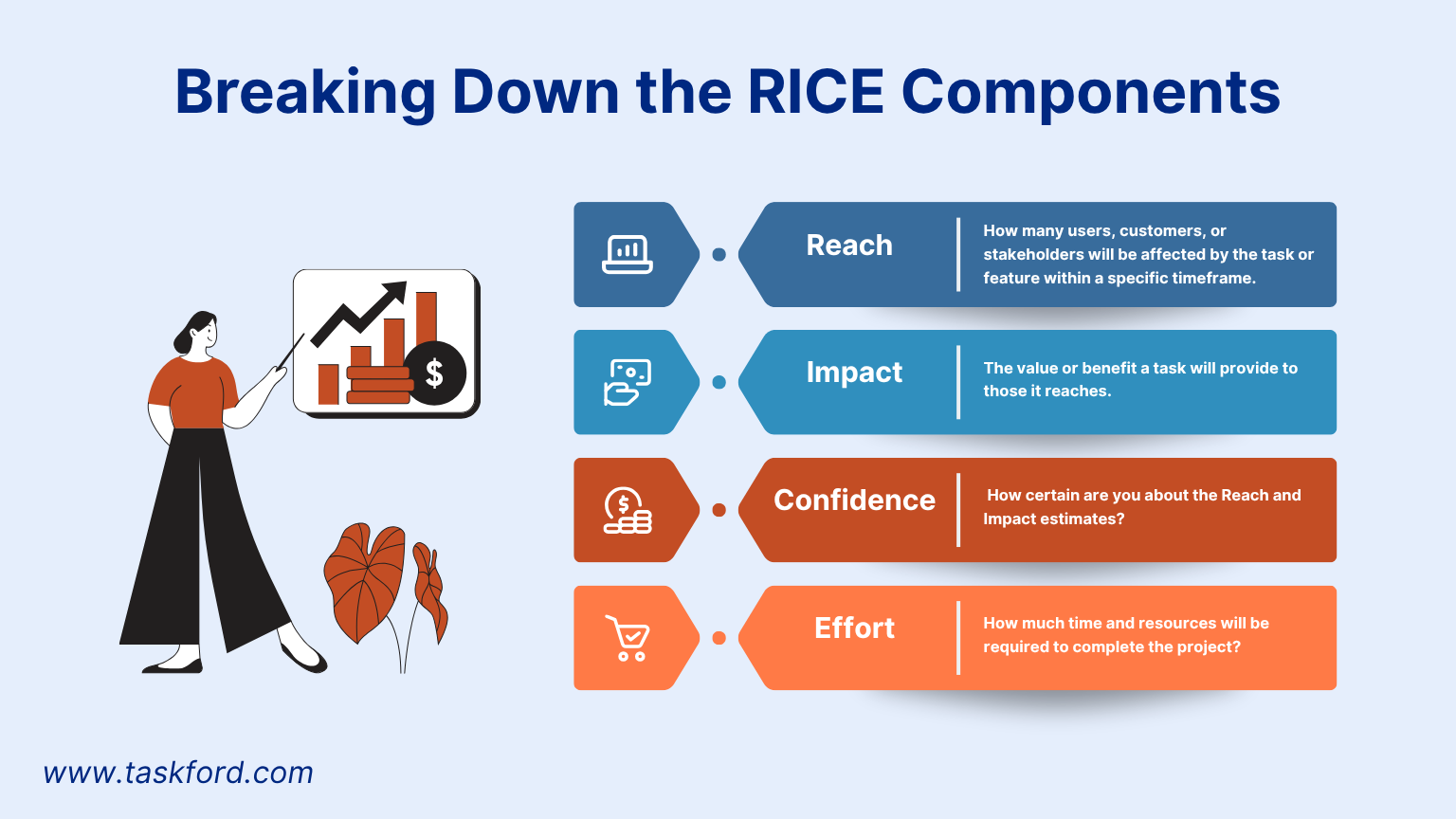
The RICE model is built on four components. Each is scored individually, and the final RICE score is calculated using a simple formula. Let’s explore each component:
1. Reach
Reach measures how many users, customers, or stakeholders will be affected by the task or feature within a specific timeframe. It’s typically expressed as a number, such as the number of users impacted in a month or quarter.
For example, if you’re developing a new website feature that you expect 5,000 users to interact with monthly, the Reach score is 5,000.
To estimate Reach, use data from analytics tools, customer surveys, or historical performance. If data isn’t available, make an educated estimate based on similar projects.
2. Impact
Impact assesses the value or benefit a task will provide to those it reaches. This could be increased revenue, improved user satisfaction, or enhanced team productivity. Intercom suggests using a scale of 0 to 3:
- 3 = Massive impact
- 2 = High impact
- 1 = Medium impact
- 0.5 = Low impact
- 0.25 = Minimal impact
For example, a feature that significantly boosts user retention might score a 3, while a minor UI tweak might score 0.5.
Choosing an Impact score requires aligning with project objectives. For instance, in a customer-facing project, improving user experience might carry more weight than internal process improvements.
3. Confidence
Confidence measures how certain you are about the Reach and Impact estimates. This factor is critical because the accuracy of your prioritization relies on how well you can predict the outcomes of a project. A higher confidence score means you are more certain of the project’s potential success, while a lower confidence score could indicate that further research or validation is needed. It’s expressed as a percentage, typically ranging from 20% (low confidence) to 100% (high confidence). This factor accounts for uncertainty in data or assumptions.
For example, if you have solid data from past projects to support your Reach and Impact estimates, you might assign a Confidence score of 90%. If you’re relying on guesses, you might use 50%.
This component ensures teams don’t overestimate benefits based on shaky assumptions, adding a layer of realism to the prioritization process.
4. Effort
Effort measures how much time and resources will be required to complete the project, usually measured in the number of hours your team will need, the cost of resources, or other factors that contribute to the overall workload. The goal is to quantify the time and effort required from the team; a lower effort score typically indicates that a project is less resource-intensive and more feasible.
For example, if a task requires two developers working for five days each, the Effort score is 10 person-days.
Accurate Effort estimates come from breaking tasks into smaller components and consulting team members with relevant expertise. Overestimating or underestimating Effort can skew the RICE score, so precision is key.
How to Use the RICE Scoring Model in Project Management
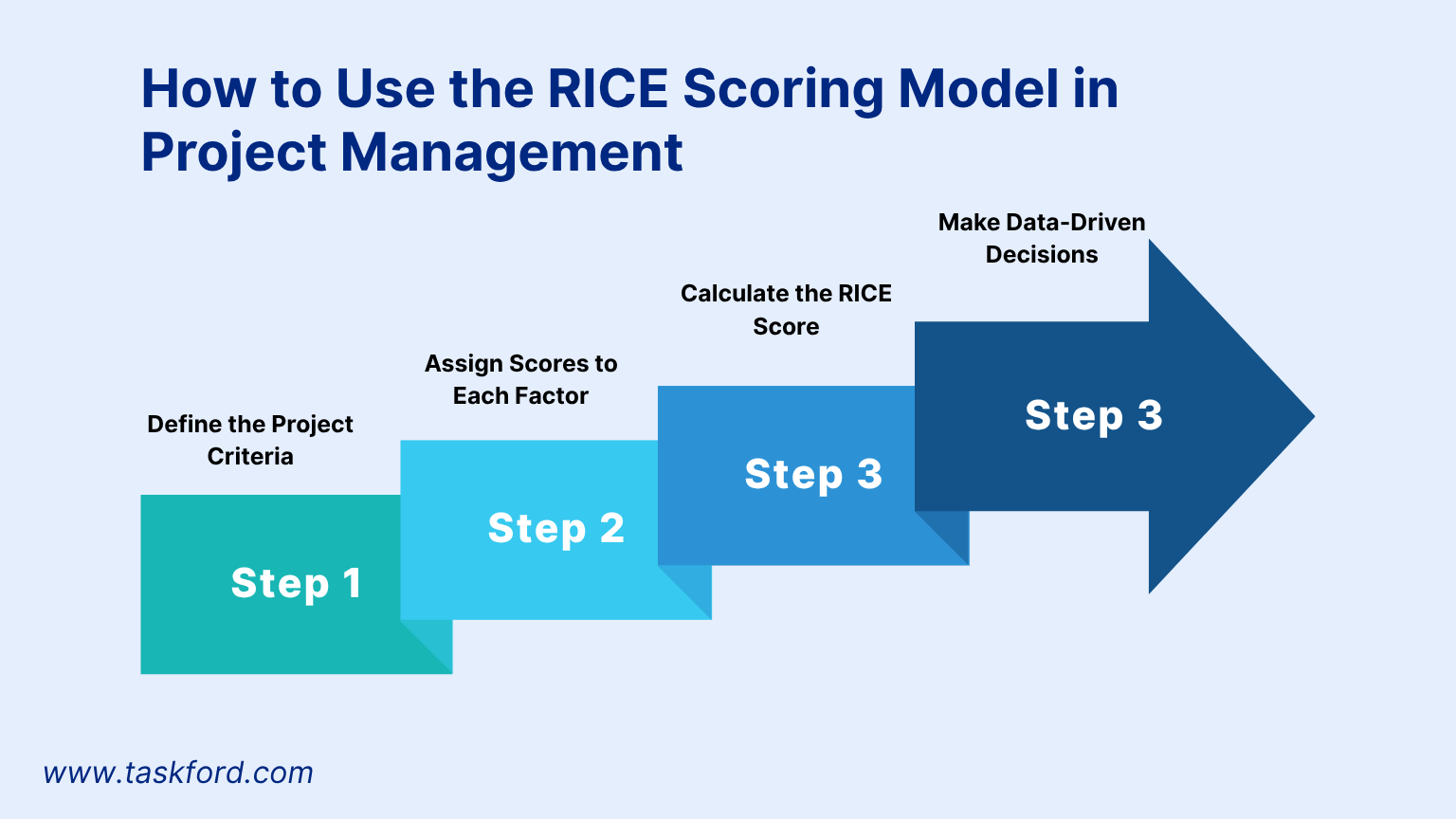
Step 1: Define the Project Criteria
Before you can apply the RICE method, it’s essential to define the criteria for your project. What are the specific goals and expected outcomes? What kind of resources will you be using? These questions will help shape how you score each component of RICE.
Step 2: Assign Scores to Each Factor
Once you’ve defined the criteria, you’ll need to assign scores for each of the four components:
- Reach: How many people will this affect? For example, a feature that benefits 500 users will have a higher reach than one that impacts 50 users.
- Impact: How significant will this impact be? If a feature will significantly increase customer retention, it may be rated high in impact.
- Confidence: How sure are you about the estimates? If your team has experience with similar projects and has reliable data, the confidence score will be high.
- Effort: How much time or resources will the project take? This is typically measured in person-hours, costs, or other relevant metrics.
Step 3: Calculate the RICE Score
Apply the formula mentioned earlier to calculate the RICE score for each project or task. The projects with the highest scores should be prioritized, as they represent the highest return on investment (ROI) relative to the resources required.
Step 4: Make Data-Driven Decisions
Once you have the RICE scores, you can confidently make decisions about which projects should be prioritized. The higher the RICE score, the higher the priority of the project. Keep in mind that this is a flexible model - if additional information becomes available or conditions change, you can revisit the RICE scores and adjust the prioritization accordingly.
How TaskFord Complements the RICE Scoring Model
Once you’ve used the RICE Scoring Model to prioritize your projects, TaskFord becomes the tool that helps you execute those priorities efficiently. As an Integrated Work Delivery Platform, TaskFord is designed to help teams plan, manage, and execute projects with precision.
While the RICE model helps identify high-impact projects, the app ensures your team can effectively manage and complete those projects by providing the following key capabilities:
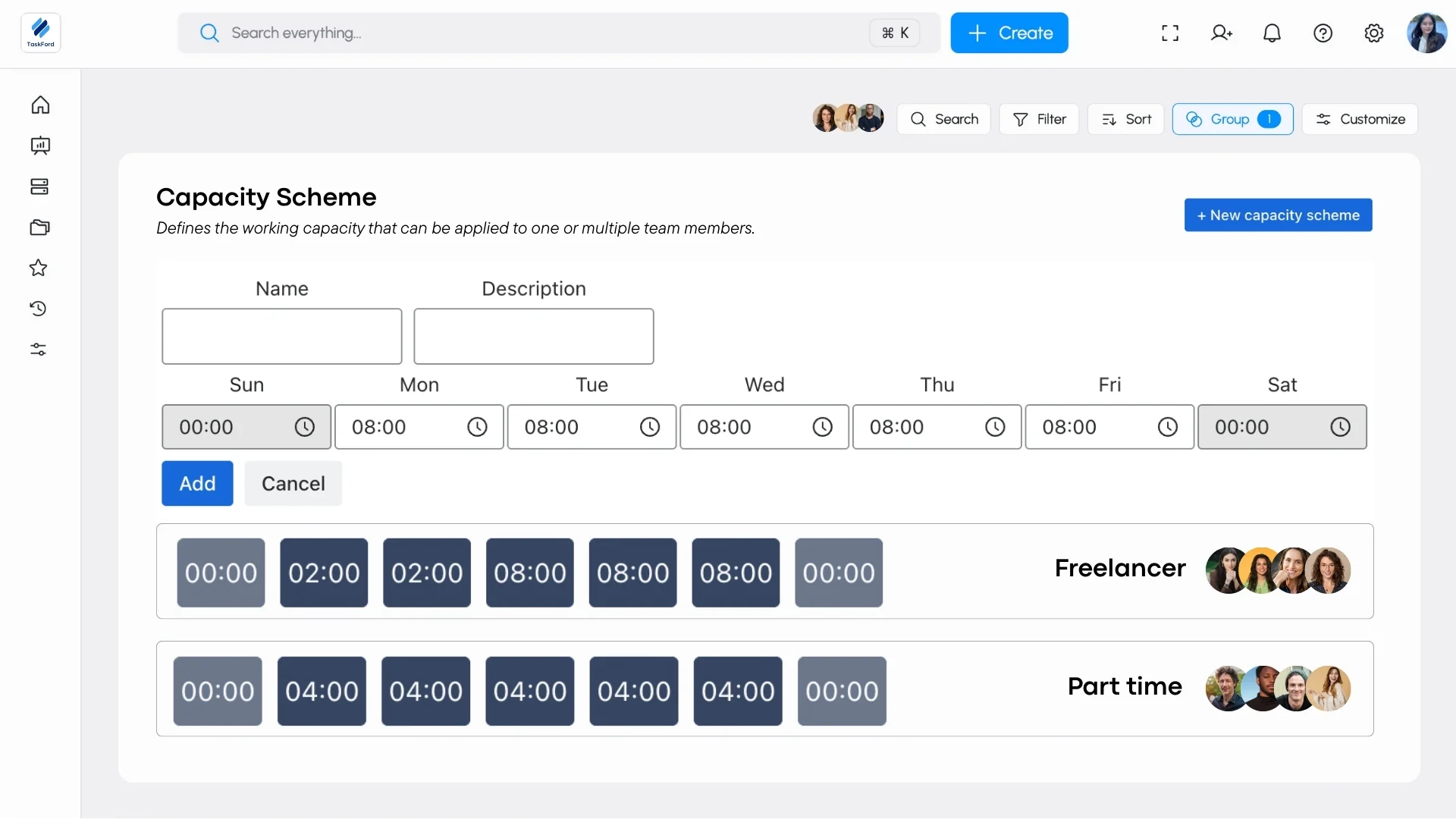
1. Resource Planning and Capacity Management
The RICE method helps you prioritize tasks based on impact, but TaskFord takes it a step further by ensuring that the right resources are allocated to the highest-priority tasks. With TaskFord’s capacity planning features, you can see real-time availability of your team and assign tasks based on their workload, skill sets, and availability.
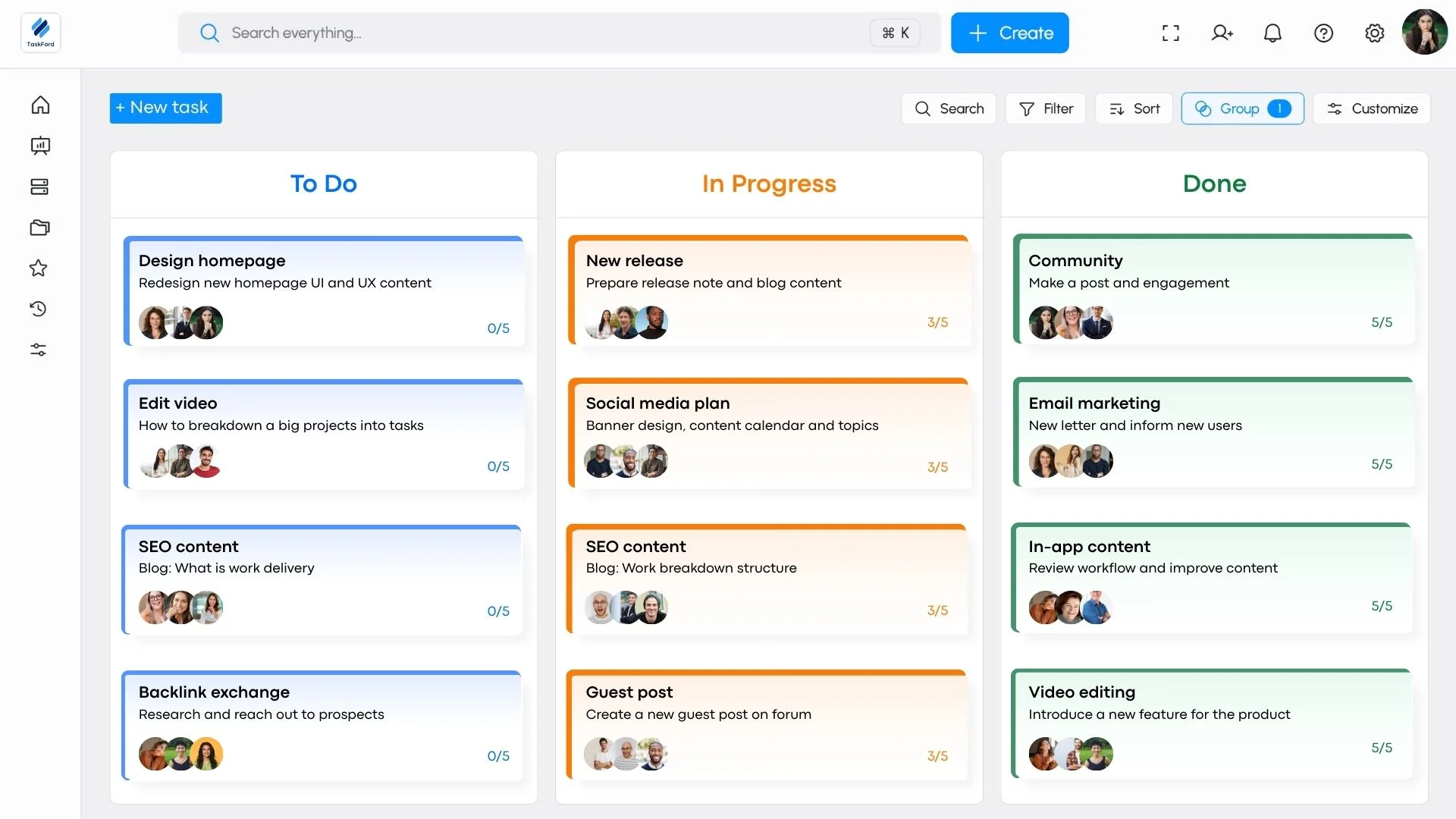
2. Task Management and Prioritization
In TaskFord, once you’ve prioritized tasks using the RICE model, you can organize, track, and manage these tasks with clear deadlines, responsibilities, and progress tracking. TaskFord’s task management feature allows you to set milestones, break tasks into smaller actionable steps, and monitor progress, helping teams stay focused on high-impact projects.
3. Real-Time Progress Tracking
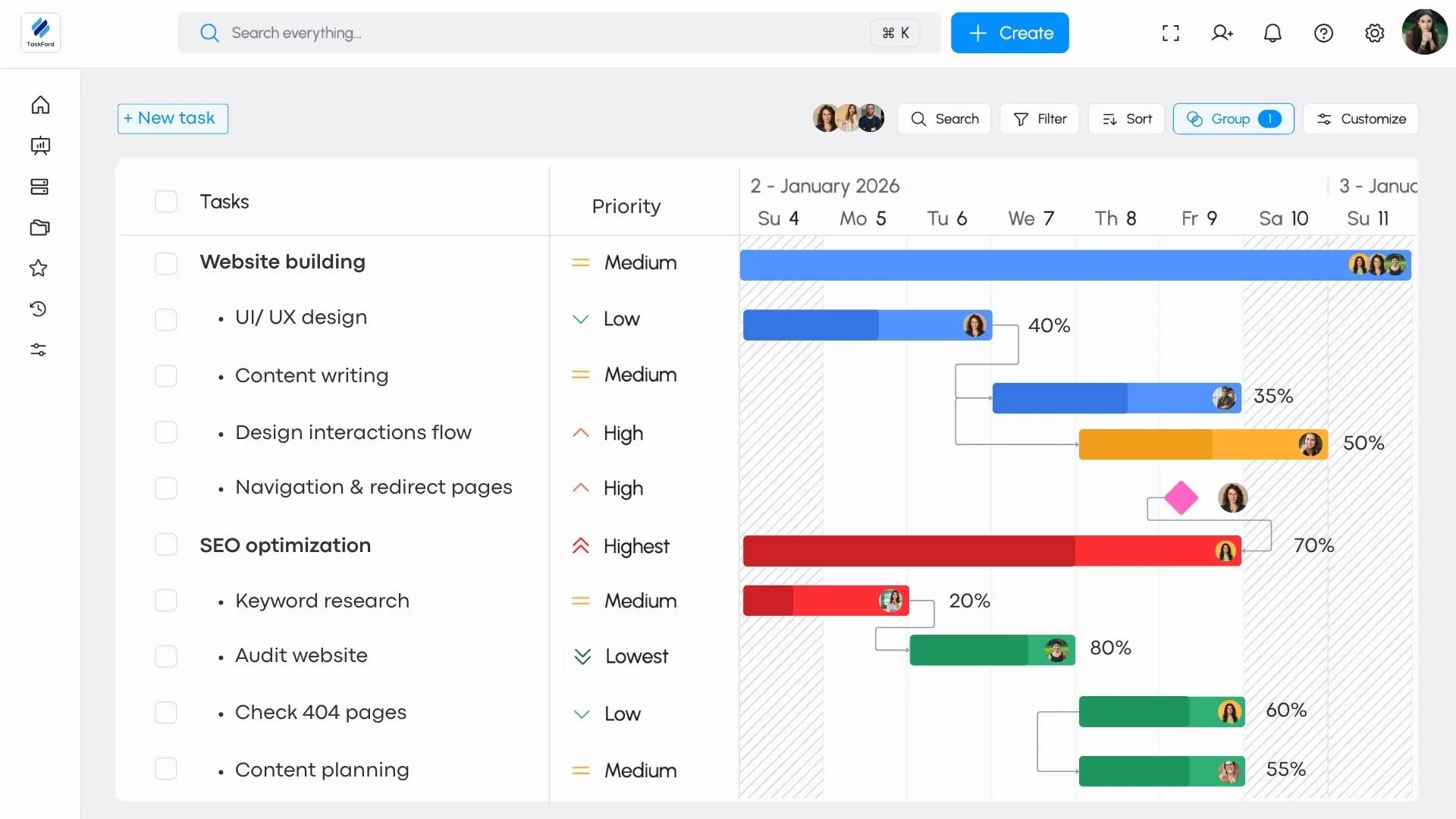
TaskFord provides real-time tracking of task statuses, team capacity, and project timelines. This helps you stay on top of high-reach tasks (the “R” in RICE) and ensures resources are utilized as planned, allowing for quick adjustments when needed. Visual tools like Gantt charts and dashboards track effort and impact throughout the project.
4. Financial Visibility and Cost Tracking
TaskFord tracks costs and time, giving you insight into how your efforts align with your budget. This helps ensure high-impact projects stay within financial constraints and allows better resource allocation for future RICE-prioritized tasks.
5. Seamless Collaboration and Alignment
TaskFord’s collaboration tools help teams stay aligned by sharing updates, feedback, and decisions throughout the project. This transparency ensures everyone stays focused on the right tasks and priorities, driving project success.
The RICE model prioritizes projects based on reach, impact, confidence, and effort, while TaskFord brings those priorities to life with real-time resource planning, task management, progress tracking, and financial visibility.
Real-World Example of RICE Scoring in Project Management
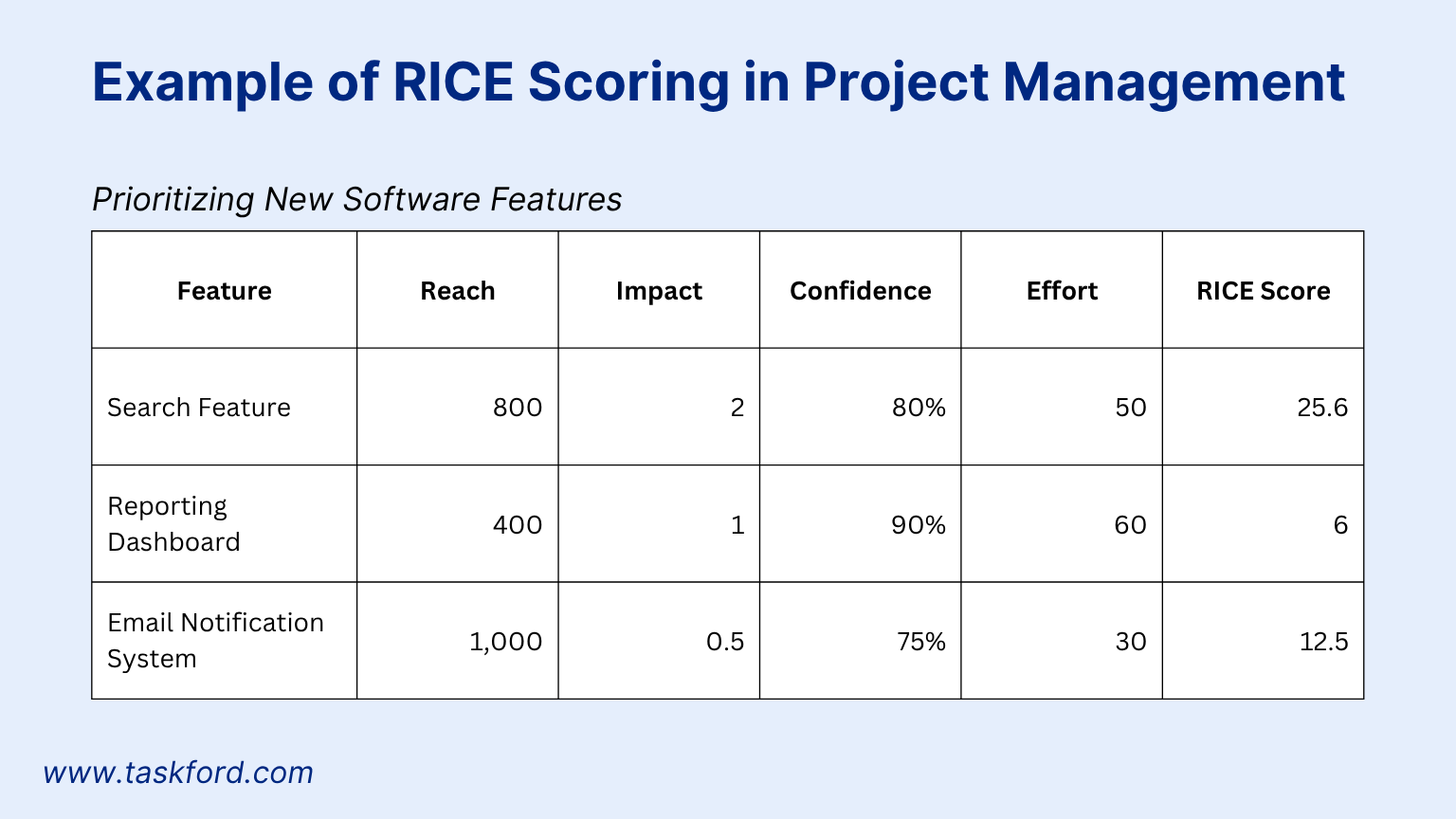
Let’s take an example to understand how the RICE model works in practice.
Example: Prioritizing New Software Features
Imagine you are managing a software development project, and you need to decide which new feature to prioritize next. You have three options: a search feature, a reporting dashboard, and an email notification system.
| Feature | Reach | Impact | Confidence | Effort | RICE Score |
|---|---|---|---|---|---|
| Search Feature | 800 | 2 | 80% | 50 | 25.6 |
| Reporting Dashboard | 400 | 1 | 90% | 60 | 6.0 |
| Email Notification System | 1,000 | 0.5 | 75% | 30 | 12.5 |
Calculations
- Search Feature: (800 × 2 × 0.8) ÷ 50 = 25.6
- Reporting Dashboard: (400 × 1 × 0.9) ÷ 60 = 6.0
- Email Notification System: (1,000 × 0.5 × 0.75) ÷ 30 = 12.5
Analysis
- Search Feature: With a Reach of 800 users and a high Impact score of 2, this feature offers significant value. The 80% Confidence score reflects reliable data, but the high Effort (50 person-days) lowers its RICE score slightly.
- Reporting Dashboard: This has a moderate Reach (400 users) and medium Impact (1), with high Confidence (90%). However, the high Effort (60 person-days) results in the lowest RICE score.
- Email Notification System: The highest Reach (1,000 users) and lowest Effort (30 person-days) make this a strong contender, despite a lower Impact score (0.5) and moderate Confidence (75%).
Result: The Search Feature has the highest RICE score (25.6), making it the top priority, followed by the Email Notification System (12.5) and the Reporting Dashboard (6.0). This aligns with project management principles, where delivering maximum value efficiently is key.
To dive deeper into effective prioritization strategies, we recommend exploring the fundamentals of project management. Visit our guide on What is Project Management for more insights.
Conclusion
The RICE scoring model is a powerful tool for project managers looking to prioritize tasks, projects, or features in a structured, data-driven way. By focusing on reach, impact, confidence, and effort, project managers can make more informed decisions and ensure resources are allocated to projects with the highest potential return.
By implementing RICE scoring, you not only streamline your workflow but also foster greater team alignment and ensure that the right projects are given priority.
Learn More
- Project Management Software for Teams in 2026: Expert Reviews & Comparison.
- Best Resource Planning Software for Team Capacity (2026 Rankings)
- Ranking the Best Free Task Management Tools for Teams of 2026
Subscribe for Expert Tips
Unlock expert insights and stay ahead with TaskFord. Sign up now to receive valuable tips, strategies, and updates directly in your inbox.