How Resource Leveling Helps Manage Constraints
Learn how resource leveling helps manage constraints by balancing workloads, reducing conflicts, and creating realistic project schedules that teams can deliver
Resource constraints happen in every project, no matter how well-prepared the team is. People take unexpected leave. Equipment gets overbooked. Procurement takes longer than expected. Schedules tighten. When these issues pile up, teams find themselves juggling overlapping tasks, shifting priorities, and racing against deadlines that no longer reflect reality.
This is where resource leveling becomes not just useful, but essential. Resource leveling is one of the most practical techniques in resource management and resource planning, helping teams manage overload, avoid scheduling conflicts, and build timelines that match real-world capacity. Instead of hoping everything fits, leveling gives you a systematic way to align work with availability.
This article explains how resource leveling works, why it matters, and how it helps manage different types of project constraints, especially when teams are stretched thin.
What Is Resource Leveling?
If a project schedule is a map, resource leveling is the process of making sure the road is actually drivable.
The formal definition is straightforward: resource leveling adjusts task dates to remove over-allocation and match the team’s real capacity. When someone is booked for more work than they can handle, the schedule shifts instead of squeezing tasks into the same timeframe.
The idea sounds basic, but in practice, it’s one of the most powerful tools in resource planning. Instead of forcing deadlines that don’t reflect reality, resource leveling:
- Removes conflicting assignments
- Balances workloads across days or weeks
- Reduces unpredictable spikes in effort
- Makes timelines more accurate and easier to follow
It’s the opposite of guess-and-hope scheduling. It’s planning based on capacity, not wishful thinking.
How Resource Leveling Differs from Resource Smoothing
People often confuse resource leveling with resource smoothing, but they solve different kinds of problems.
Resource smoothing is used when deadlines cannot move. The schedule stays fixed, and tasks are rearranged only within the available float. It’s a technique for fine-tuning.
Resource leveling, however, changes the timeline itself. It doesn’t try to protect the original due date at all costs. If the team is overallocated, leveling adjusts the duration so work is completed sustainably.
In simple terms:
- Smoothing protects the deadline.
- Leveling protects the team.
Both techniques belong to the broader discipline of resource management, but leveling is the one project managers turn to when constraints tighten and capacity becomes the limiting factor.
Types of Resource Constraints
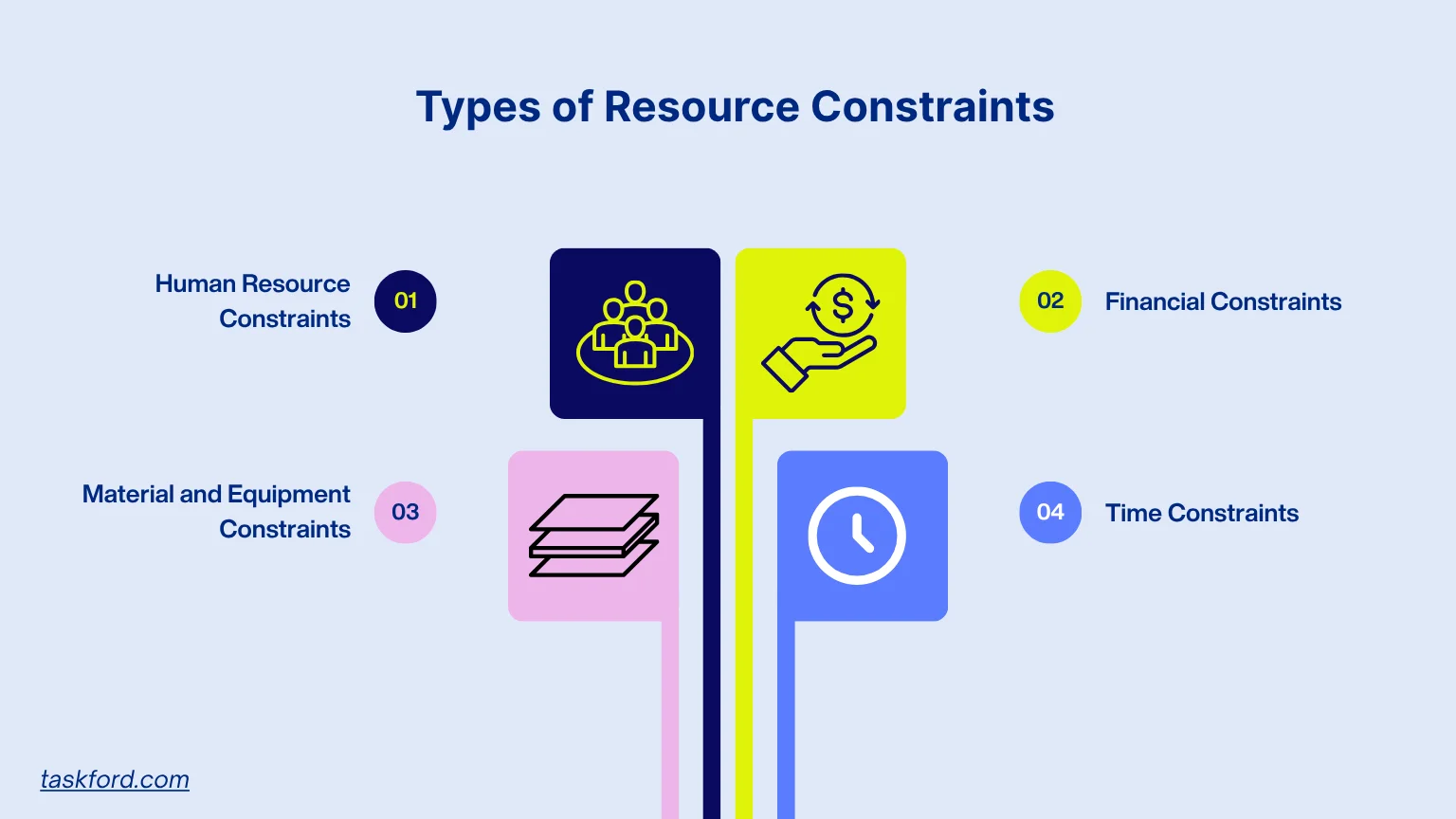
Projects face several categories of resource constraints. These influence how teams plan, schedule, and adjust their workload.
- Human Resource Constraints: When staffing is limited whether due to absences, turnover, or skill shortages, teams struggle to keep work on track. Overbooked employees quickly become bottlenecks.
- Financial Constraints: Tight budgets and cash flow delays limit hiring, slow procurement, and reduce access to required tools or materials.
- Material and Equipment Constraints: Unavailable hardware, outdated tools, delayed shipments, or shared assets create scheduling conflicts that ripple across tasks.
- Time Constraints: Compressed schedules, ignored dependencies, and underestimated durations place teams under pressure and reduce quality.
Resource leveling helps manage all these constraint types by aligning the plan with realistic capacity.
Why These Constraints Slow Projects Down without Resource Leveling
Even one constraint can disrupt a schedule, but most projects experience multiple constraints at once. When they overlap, the impact becomes harder to control. Here’s how constraints typically cause delays and pressure:
Overallocation Creates Hidden Bottlenecks
Teams often assign tasks assuming ideal conditions, but real-world capacity is rarely ideal. When one person or piece of equipment is booked on overlapping tasks, progress slows. Work piles up, queues form, and other tasks get stuck waiting.
Incorrect or Rigid Schedules Increase Risk
Schedules built without considering actual availability tend to underestimate both effort and duration. As a result:
- Dependent tasks shift unexpectedly
- Priorities collide
- High-value tasks wait behind lower-value ones
These disruptions push the project off its intended path.
Material and Equipment Delays Cascade Through the Timeline
If a critical tool or supply arrives late, all downstream tasks get delayed. This often reshapes the critical path, forcing project managers to find creative ways to resequence activities, sometimes unsuccessfully.
Time and Budget Pressure Raise Error Rates
When timelines shrink or budgets tighten, teams cut corners. Rushed work increases the likelihood of mistakes and rework, which in turn leads to more delays.
These setbacks highlight the need for a technique that stabilizes the schedule and redistributes work to match reality—exactly what resource leveling provides.
How Resource Leveling Helps Manage These Constraints
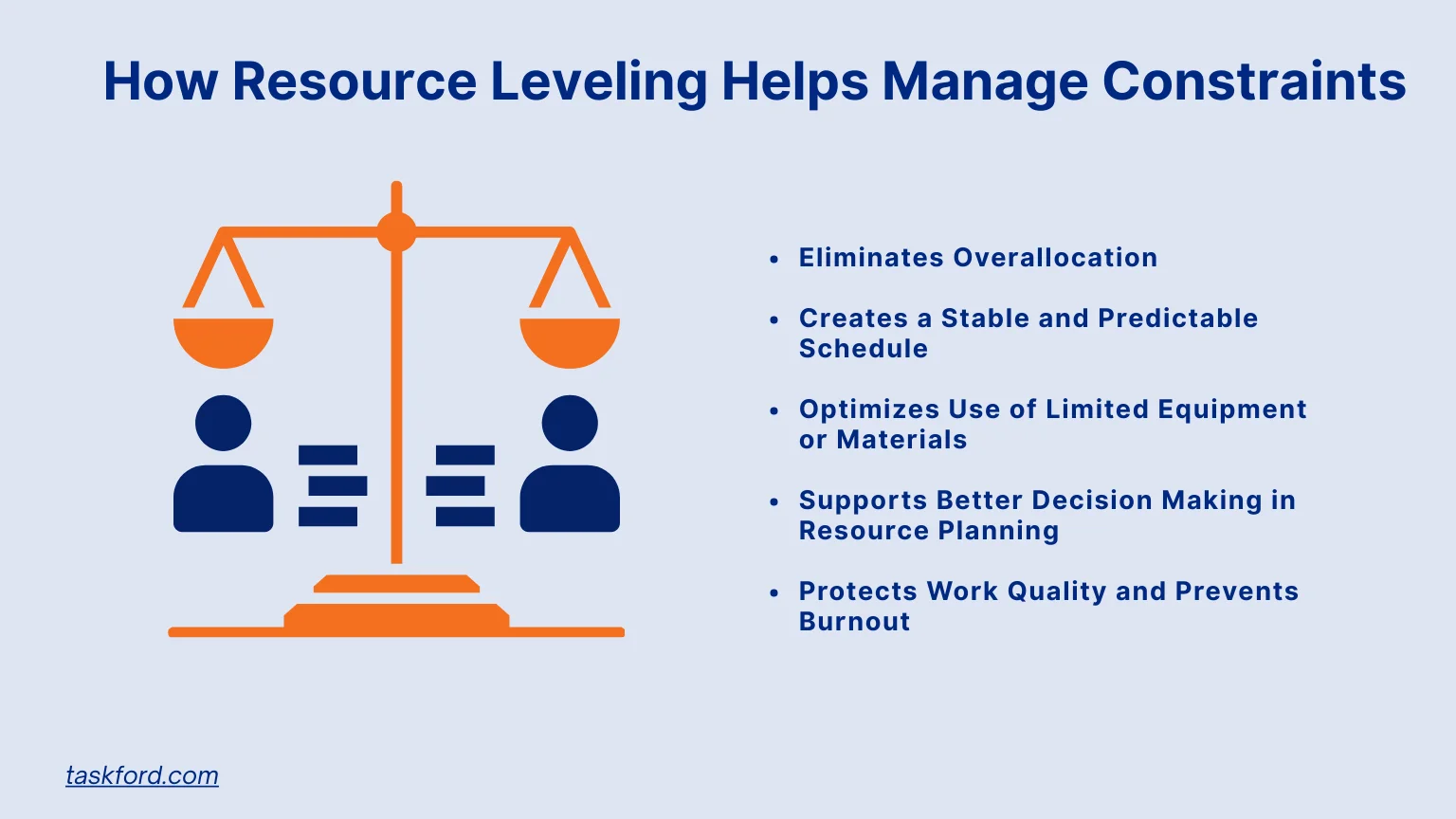
Resource leveling gives teams a systematic way to adjust schedules based on real availability. Instead of reacting to bottlenecks after they occur, leveling prevents them from forming in the first place.
1. Eliminates Overallocation
Leveling ensures that no individual, tool, or material is scheduled for two tasks at the same time. If a developer is assigned to overlapping tasks, leveling moves one task to a later date where capacity exists. This stops small conflicts from turning into delays.
It also protects critical team members whose overscheduling often goes unnoticed until it becomes a crisis.
2. Creates a Stable and Predictable Schedule
Workload spikes drain energy, reduce productivity, and lead to rushed tasks. Leveling smooths these spikes by spreading work across a realistic timeframe.
This creates:
- steadier progress
- fewer last-minute changes
- higher consistency across tasks
Teams perform better when workloads remain balanced.
3. Optimizes Use of Limited Equipment or Materials
Many teams rely on shared equipment, specialized environments, or specific materials that cannot be duplicated easily. Leveling helps schedule work so that these items are used efficiently rather than inefficiently jammed together.
It prevents downtime and avoids conflict between teams that need the same limited assets.
4. Supports Better Decision Making in Resource Planning
Resource leveling makes conflicts visible early in the project. Instead of discovering an issue during the execution phase, teams can see:
- when a resource will be overbooked
- when procurement needs to occur
- when a task will push the critical path
- when additional hands are needed
With this visibility, managers can make strategic decisions—change the timeline, adjust scope, or escalate for support.
5. Protects Work Quality and Prevents Burnout
Excessive overtime, rushed deadlines, and compressed schedules lower morale and increase turnover risk. Leveling spreads work in a sustainable manner, giving teams the ability to focus on quality, not just speed.
This protects both the project and the people delivering it.
How Resource Leveling Works (Step-by-Step)
Leveling is structured, logical, and data-driven. Here’s how teams typically apply it:
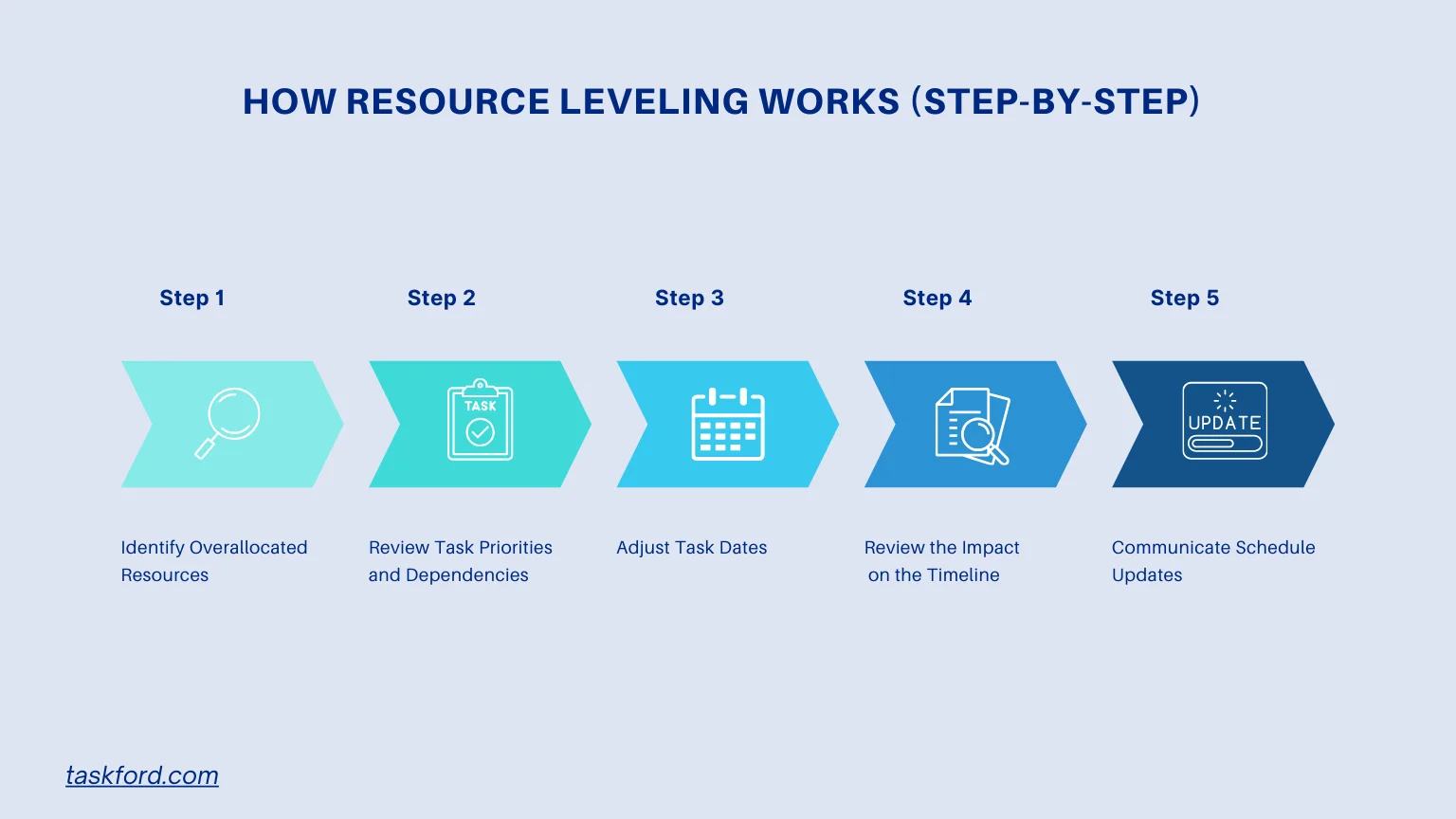
Step 1: Identify Overallocated Resources
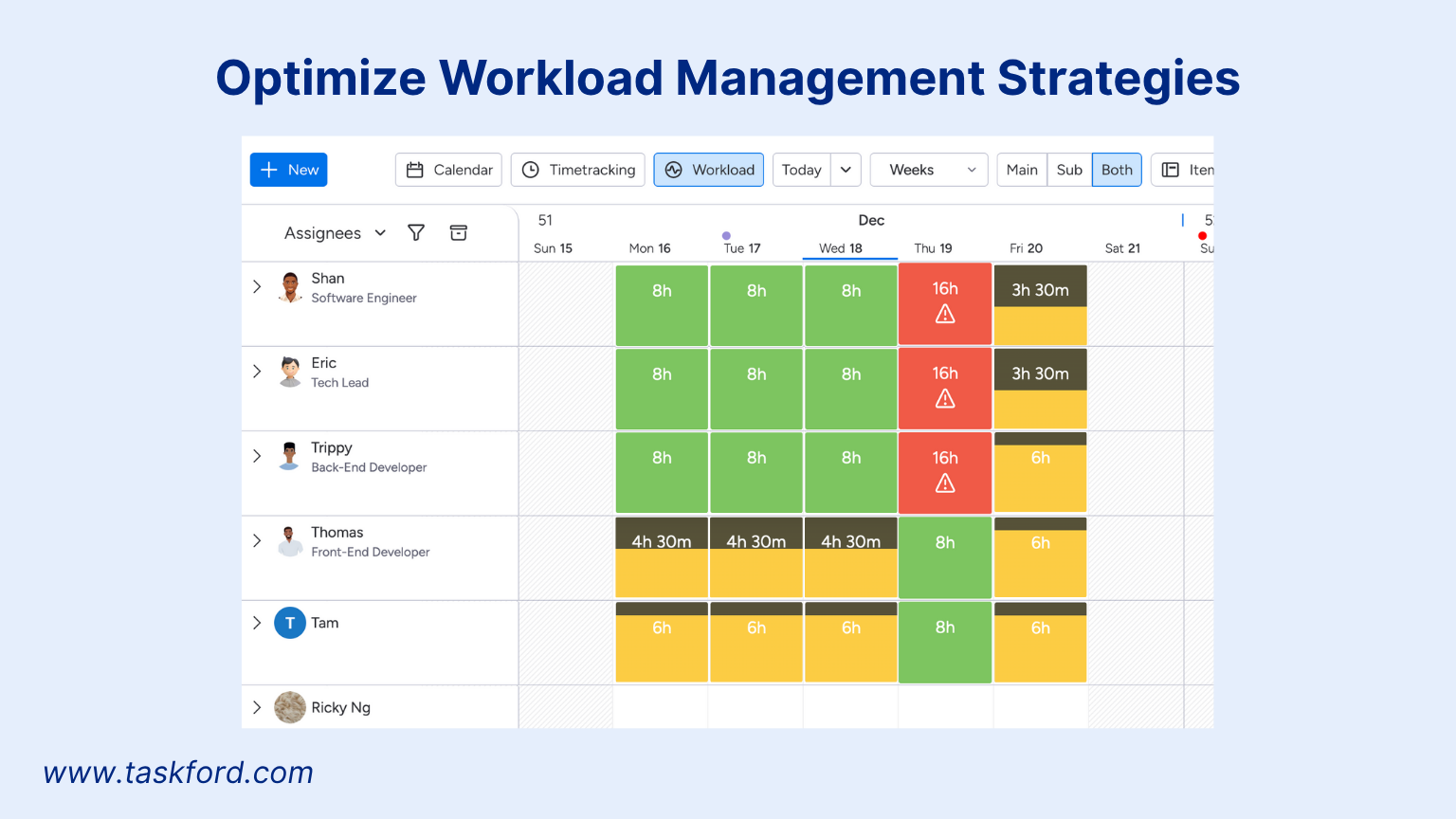
This step alone can change the entire conversation. Seeing all conflicting assignments in a single view makes the problem visible. Gantt charts, utilization reports, workload calendars or whichever tool you use, the goal is the same: highlight overloads clearly.
Step 2: Review Task Priorities and Dependencies
Not all tasks can move freely. Some depend on earlier work, some sit on the critical path, and some can be shifted without affecting anything. Determine which tasks:
- must occur first
- can move
- have project float or task
- sit on the critical path
Understanding task relationships ensures any adjustment maintains project logic.
Step 3: Adjust Task Dates
This is the core of resource leveling. Tasks that overload a resource are moved to a later time where capacity exists. Sometimes this change is small. Sometimes it affects milestones. What matters is that the schedule now reflects reality, not assumptions.
Step 4: Review the Impact on the Timeline
Leveling may extend the overall schedule. This is normal, as the technique prioritizes realistic capacity. After adjustments:
- review whether deadlines still hold
- check whether additional resources are needed
- confirm that critical tasks remain achievable
Step 5: Communicate Schedule Updates
Transparent communication prevents confusion and rebuilds trust. Once leveling adjusts the timeline, teams and stakeholders should be updated so expectations remain aligned.
Practical Examples of Resource Leveling in Action
Theory is helpful, but real examples make resource leveling easier to understand.
Example 1: A Developer With Overlapping Tasks
A developer assigned to two major tasks scheduled for the same week will naturally fall behind. Leveling moves the second task to the following week, preventing delays and stress. Dependencies remain intact, and progress is steady.
Example 2: A Testing Environment Shared by Multiple Teams
If two teams require the same testing environment, only one can use it at a time. Leveling sequences their tasks so they occur back-to-back instead of in competition.
Benefits of Effective Resource Leveling
The more consistently a team uses resource leveling, the more predictable their delivery becomes.
- Less burnout because workloads are realistic
- Fewer surprise delays because constraints are accounted for early
- Higher morale because schedules feel achievable
- Stronger cross-team collaboration because conflicts are visible
- Better forecasting because plans rely on capacity, not optimism
One of the biggest long-term advantages is that teams stop living in “crisis mode.” Once the schedule reflects actual capacity, project managers can make decisions calmly and confidently.
When Resource Leveling Isn’t the Right Choice
Leveling is powerful, but it’s not always the correct solution. If the deadline is fixed and cannot shift, resource smoothing may be the better option. Smoothing works within the existing timeline and rearranges tasks only in available float.
Leveling also becomes less effective when the team refuses to adjust priorities or when leadership insists on unrealistic schedules regardless of capacity. In these environments, leveling exposes the problem, but it cannot solve it without buy-in.
Tools That Support Resource Leveling
Most project management tools have features that help with leveling, each with different strengths.
- Gantt charts for timeline visualization
- Resource heatmaps for spotting overload
- Capacity planning dashboards for forecasting
- Workload calendars for day-to-day clarity
Some tools automate leveling. Others provide the visibility needed for manual adjustments. Either way, the technique works best when the team uses consistent data and keeps availability up to date.
Tip: TaskFord is a comprehensive project management and resource planning platform that offers multiple features to help teams of all size with resource leveling, especially the ability to provide great workload and capacity tracking.
Final Thoughts
Resource constraints are unavoidable, but they do not have to derail a project. Resource leveling provides a structured way to align workloads with real capacity, reduce overload, and create schedules that teams can actually follow.
Rather than reacting to burnout, delays, or constant rescheduling, teams can use leveling to prevent these problems altogether. When paired with strong resource planning, clear communication, and realistic expectations, it becomes one of the most valuable techniques in modern resource management.
Learn more
- Top 8 Resource Planning Software for Hybrid Teams in 2026: A Feature-by-Feature Comparison
- 8 Resource Optimization Techniques Your Team Will Thank You For
- What is Resource Planing? Definition, Examples and How to Do it Right?
Subscribe for Expert Tips
Unlock expert insights and stay ahead with TaskFord. Sign up now to receive valuable tips, strategies, and updates directly in your inbox.