Avoid Generic Project Reports: Here’s What Stakeholders Actually Want to See
Learn how to create effective project reports that meet stakeholder needs. Avoid generic reports by tailoring content for different stakeholders.
Project reports are a cornerstone of effective project management, but generic, one-size-fits-all reports often fail to deliver the insights stakeholders need. A poorly crafted report can obscure critical details, frustrate decision-makers, and even jeopardize project success.
This guide explains how to create project reports that resonate with stakeholders by focusing on their priorities, delivering clear data, and avoiding common pitfalls. Whether you’re managing a small team or a large-scale initiative, this article provides practical steps to elevate your reporting process.
If you’re new to the project management world, we recommend exploring our article What is Project Management to get a solid understanding of the concept and its fundamentals before diving in.
What is a Project Report?
A project report is a structured document that communicates the status, progress, and key details of a project to stakeholders, such as executives, clients, or team members. It serves as a snapshot of the project’s health, summarizing milestones, budget, risks, and next steps to inform decision-making and keep everyone aligned. Unlike casual updates, a project report is formal, data-driven, and tailored to the audience’s needs, ensuring clarity and actionable insights.
Key Components of a Project Report
A project report should include three key components to ensure clarity and effectiveness.
- Executive Summary: This section offers a concise overview of the project’s objectives, current status, and key achievements. It provides busy stakeholders with a quick snapshot of the project’s health, highlighting any critical issues or milestones.
- Project Status and Progress: This part details the progress made against milestones, the current budget and resource utilization, timeline updates, and any risks or challenges. It ensures stakeholders are informed of where the project stands and what obstacles may need attention.
- Next Steps and Action Plan: The final section outlines the upcoming tasks, deliverables, and team responsibilities. It also highlights any changes in strategy or approach, ensuring stakeholders know what to expect and what actions are needed for continued success.
Purpose of a Project Report
- Track Progress: The project report helps monitor and evaluate the project’s progress against the established objectives and timelines. This allows stakeholders to identify any issues or delays and make necessary adjustments or interventions in a timely manner.
- Notify Stakeholders: The report provides key updates on the project’s status, helping stakeholders make informed decisions. These decisions might include approving additional budget, reallocating resources, or adjusting the project schedule based on the latest information.
- Identify and Manage Issues: The project report highlights potential risks, issues, or challenges that could affect the project. It also outlines mitigation plans and corrective actions to address these challenges before they escalate.
- Accountability and Documentation: The project report serves as a record of achievements, completed tasks, and responsibilities. It ensures transparency and can be referenced in the future for audits or evaluations.
By crafting clear, targeted project reports, you align stakeholders and drive project success. Check out 5 Free Project Report Templates to Download.
Why Generic Project Reports Fail to Effectively Communicate with Stakeholders
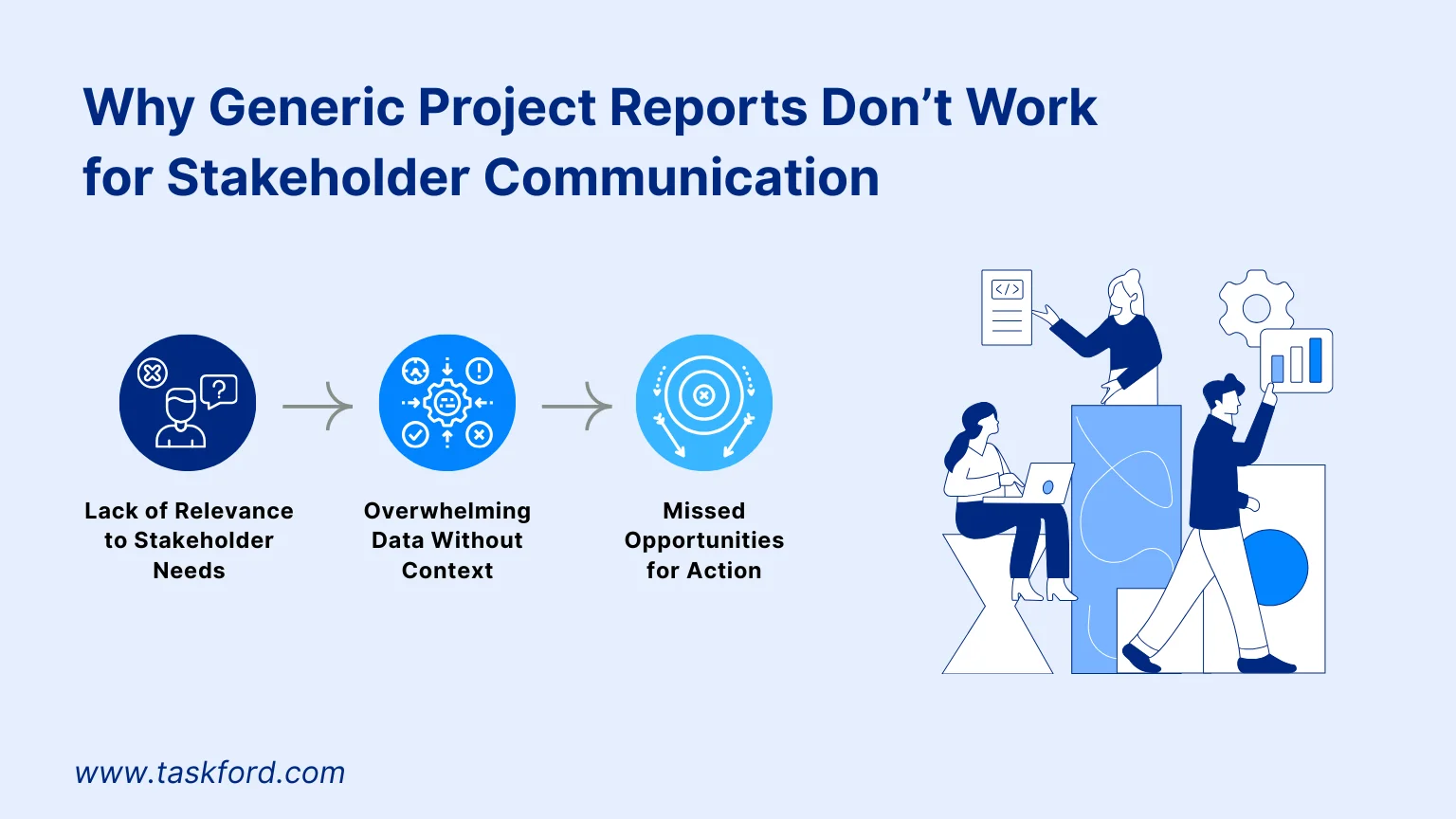
Generic reports are often filled with too much information, offering little context or clarity for the reader. They can become overwhelming and fail to address the critical elements that stakeholders care about most.
Here’s why relying on these types of reports can hurt project communication:
- Lack of Relevance to Stakeholder Needs: A generic project report often tries to cover every aspect of a project, from minor tasks to overall budgets, without prioritizing what matters to the audience. Stakeholders, whether executives, clients, or team leads, have specific concerns based on their roles. Including irrelevant details creates wasted space, making it harder for stakeholders to find the insights they need.
- Overwhelming Data Without Context: Generic reports often present a flood of raw data, such as lengthy tables, percentages, or task lists, without explaining what they mean or why they matter. This lack of context can confuse stakeholders rather than inform them, leaving them struggling to connect the dots between data and project outcomes.
- Missed Opportunities for Action: Stakeholders don’t just want a project status update; they need to know what’s going well, what needs attention, and what decisions they must make. Generic reports often gloss over these areas, listing data without highlighting actionable steps. This can leave stakeholders with more questions than answers, stalling progress and creating communication gaps.
What to Include in Project Reports
Not all stakeholders require the same level of detail or the same focus in a report; they have specific interests and expectations when it comes to receiving project updates. It’s essential to customize your project reports based on each stakeholder’s role and what information is most relevant to them. According to the Institute of Project Management, projects are more likely to be successful when communication is prioritized and maintained throughout the project lifecycle. Clear and consistent communication helps prevent misunderstandings, reduces conflicts, and enhances overall project efficiency.
Here’s a breakdown of what stakeholders really want to see in a project report:
1. Report For Executives
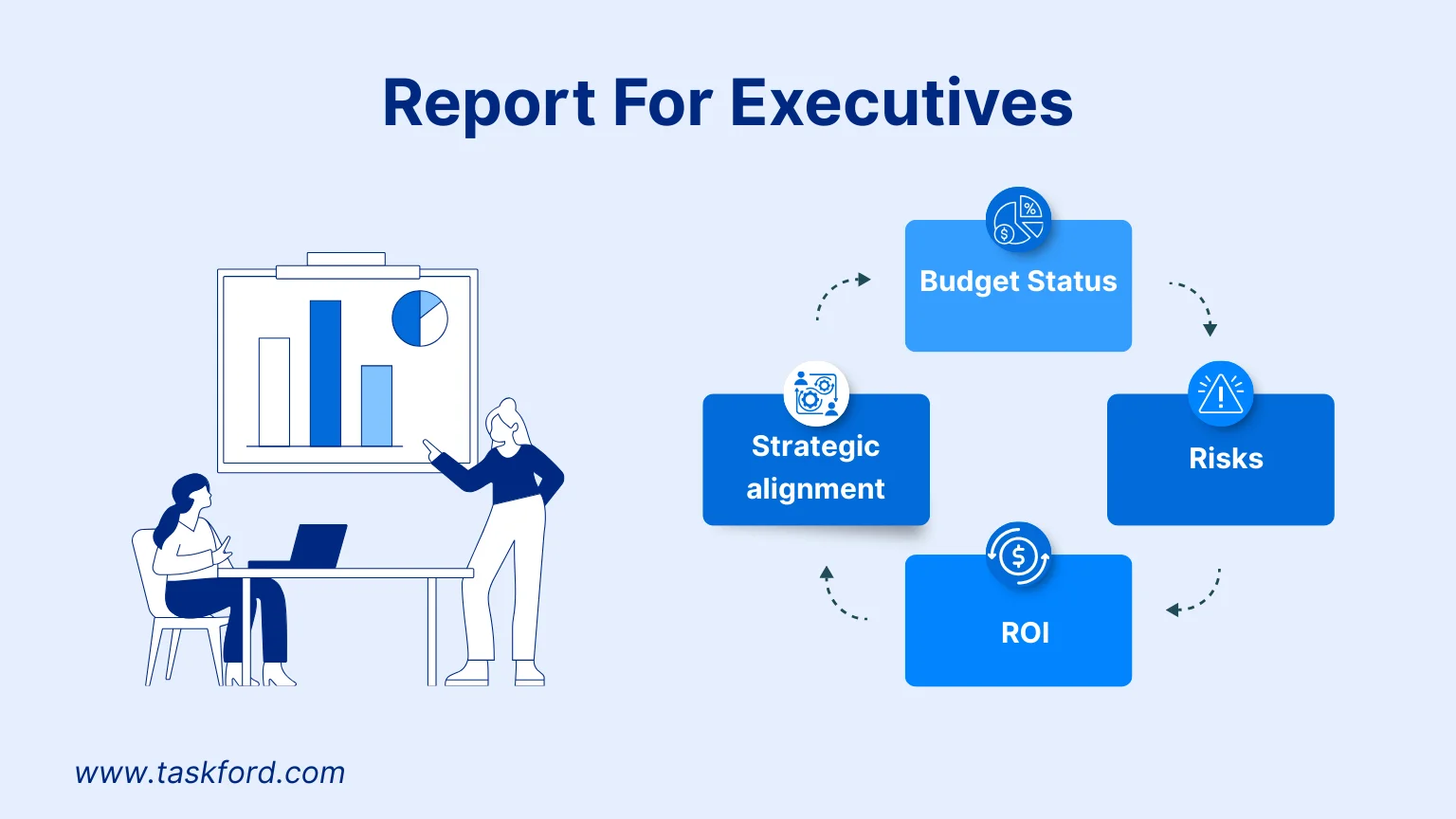
Executives are primarily interested in the strategic alignment of the project, budget health, and potential risks. They want a quick, high-level overview that helps them assess whether the project is moving toward achieving business goals and providing a return on investment (ROI).
Tailored Report Format:
- Focus: Strategic alignment, budget status, risks, and ROI.
- Key Elements: Executive summary, budget graph, key risks, and a progress summary towards business goals.
- Format: High-level summary with visuals like dashboards or Gantt charts.
- Frequency: Monthly or based on major milestones.
- Example: A concise one-page report that highlights budget performance, key risks, and progress toward business objectives, with easy-to-read graphs and visual progress indicators.
2. Report For Clients
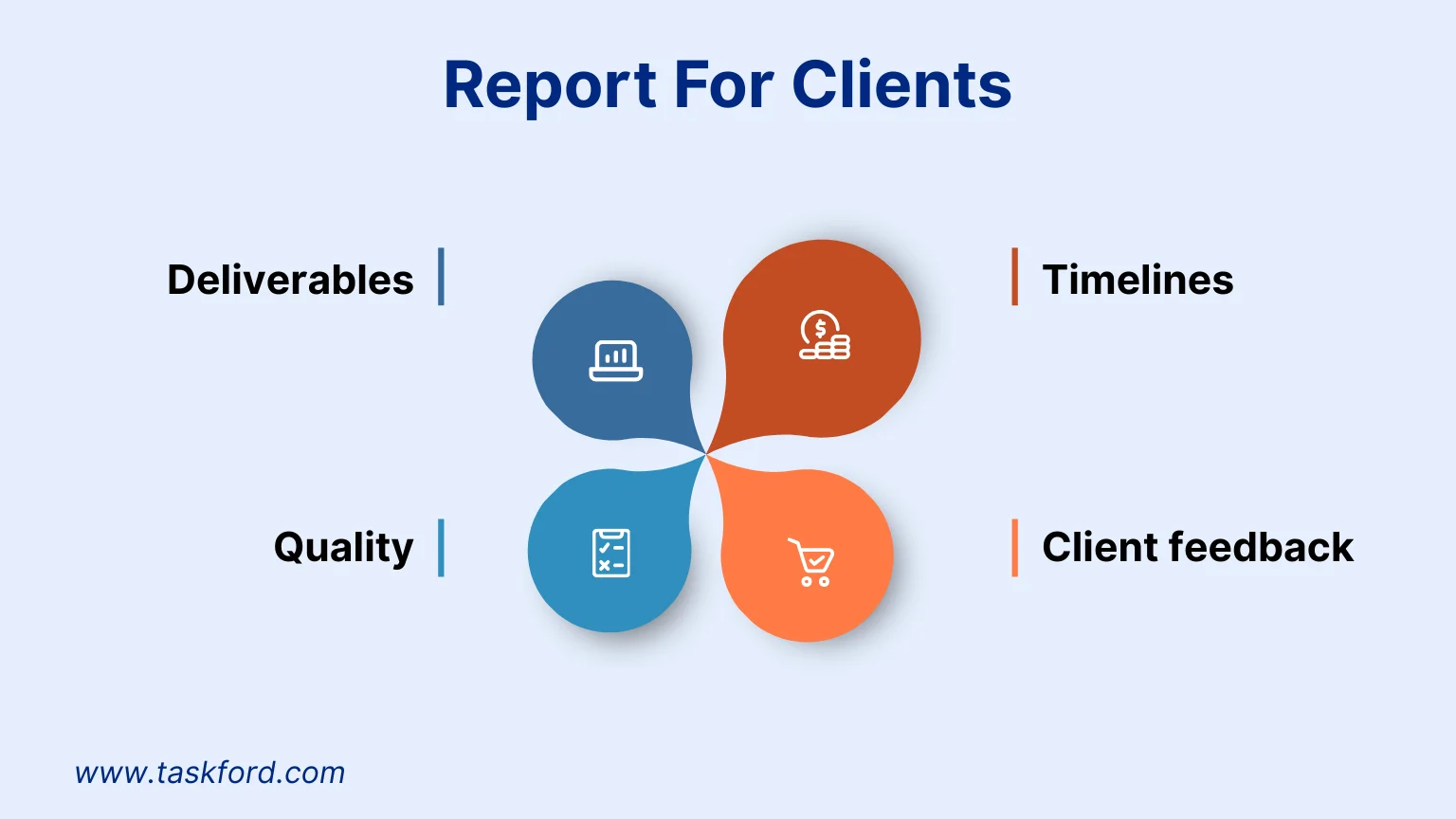
Clients are typically focused on the deliverables, quality of work, and adherence to timelines. They need to know what has been completed, what’s coming next, and how the project is aligning with their expectations.
Tailored Report Format:
- Focus: Deliverables, quality, timelines, and client feedback.
- Key Elements: Completed features, upcoming milestones, any client feedback deadlines.
- Format: Jargon-free text with clear milestone updates.
- Frequency: Bi-weekly or after major milestones or deliverables.
- Example: A straightforward report highlighting completed tasks, upcoming demos or features, and deadlines for client feedback. This helps clients understand where the project stands in terms of their specific requirements.
3. Report For Team Leads
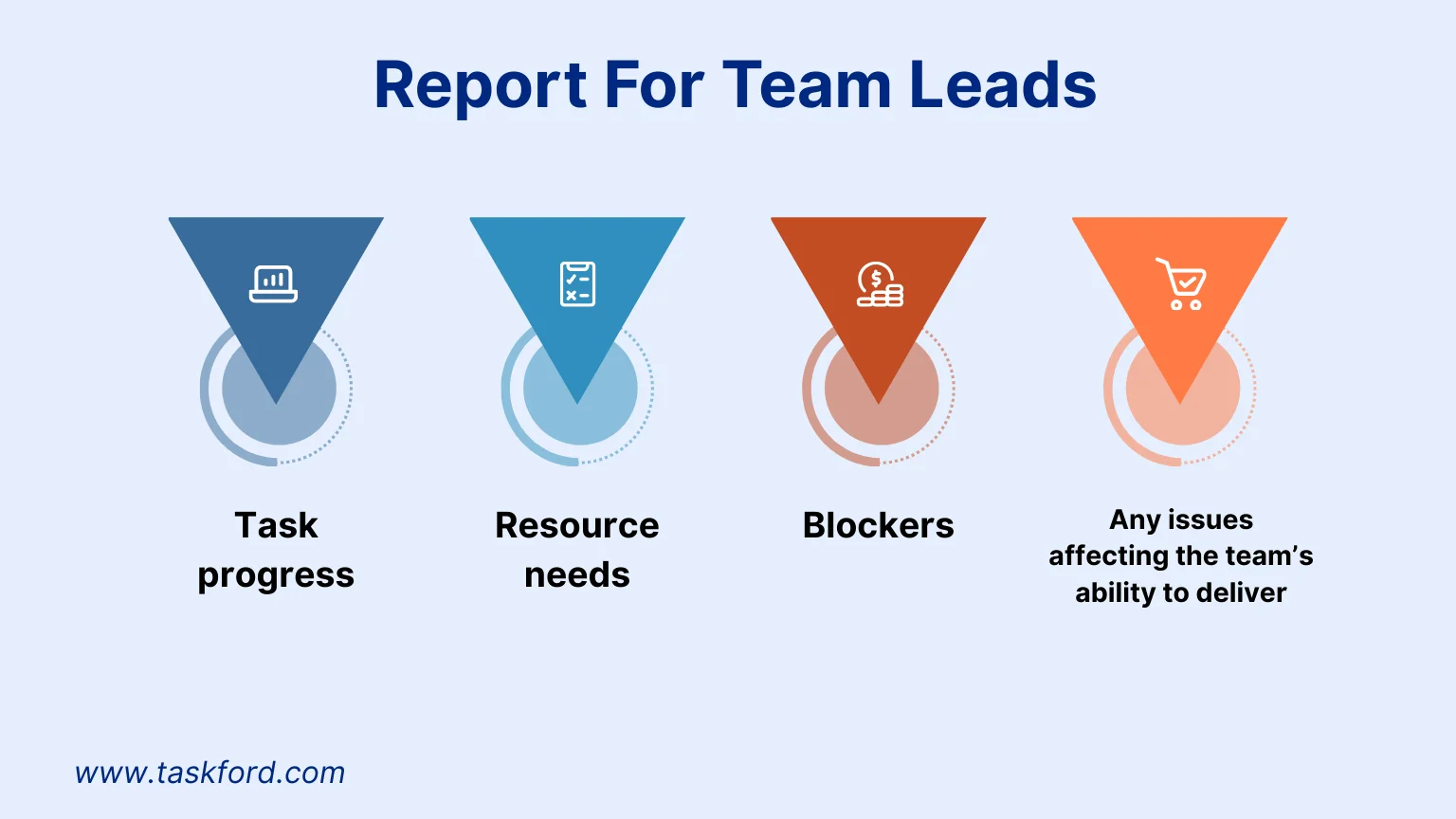
Team leads are focused on task progress, resource needs for their resource management plan, and any issues or blockers that might hinder the team’s ability to deliver on time. They need actionable insights that will help them manage day-to-day operations.
Tailored Report Format:
- Focus: Task progress, resource needs, blockers, and any issues affecting the team’s ability to deliver.
- Key Elements: Task assignments, overdue items, resource gaps, and identified blockers.
- Format: Detailed tables or lists with clear actionable insights.
- Frequency: Weekly or as needed, based on the project’s pace.
- Example: A detailed report outlining task progress, overdue assignments, and any gaps in resources or support. This allows team leads to take immediate action, adjust priorities, and ensure resources are allocated where needed.
4. Report For Project Sponsors
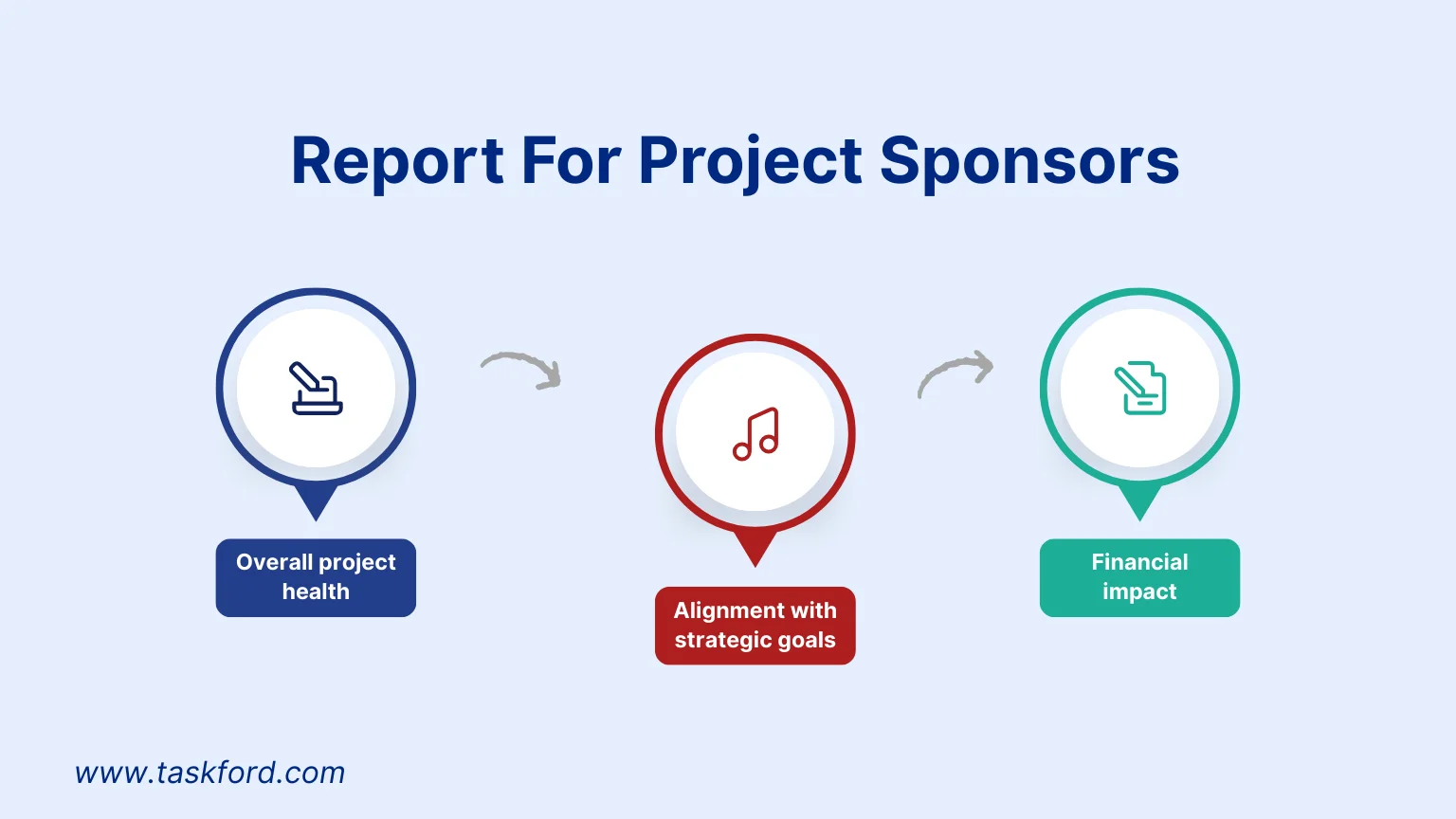
Project sponsors typically need assurance that the project is on track and aligning with the initial objectives. They are concerned with both the overall health of the project and its alignment with broader business goals.
Tailored Report Format:
- Focus: Overall project health, alignment with strategic goals, and financial impact.
- Key Elements: High-level status update, key milestones, financial health, and alignment with business goals. Format: Summary with key progress indicators and brief explanations of risks and issues.
- Frequency: Monthly or based on major milestone achievements.
- Example: A report showing progress toward key goals, budget alignment, and any red flags that need the sponsor’s attention. This gives the sponsor an overview without delving too deeply into project minutiae.
5. Report For Stakeholders Outside the Core Team
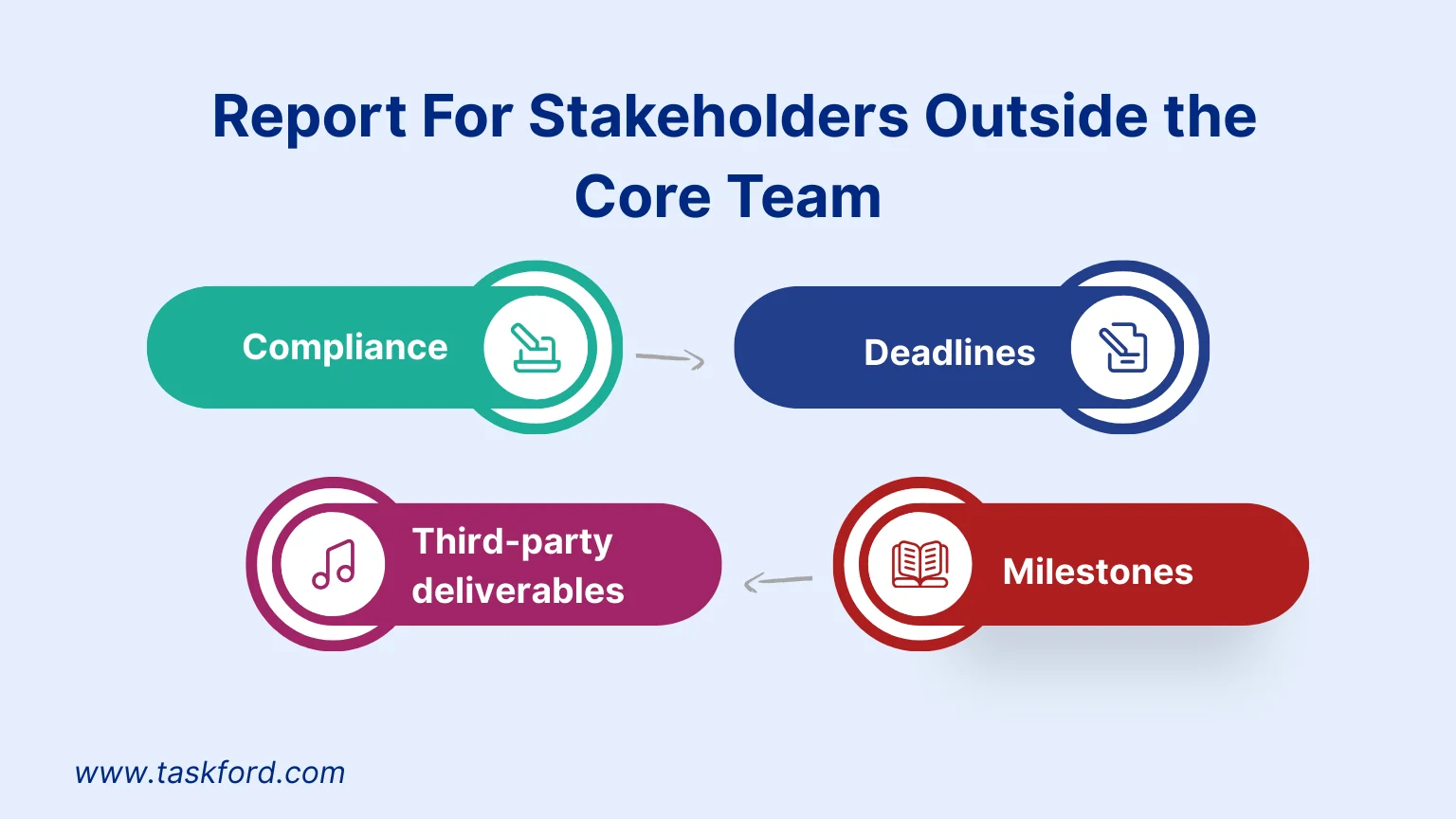
External stakeholders often focus on compliance, deadlines, and the status of any third-party deliverables. They need to understand how their area of responsibility fits into the overall project, but don’t necessarily need detailed task-level information.
Tailored Report Format:
- Focus: Compliance, deadlines, third-party deliverables, and milestones.
- Key Elements: Project milestones that affect their scope, deadlines for deliverables, and compliance with regulations or standards.
- Format: A focused, straightforward summary that highlights what’s relevant to them.
- Frequency: As agreed upon or based on external project milestones.
- Example: A report showing the status of relevant deliverables and compliance requirements, with clear deadlines and dependencies.
Conclusion
Creating effective project reports is a vital part of successful project management, but generic, one-size-fits-all reports simply won’t cut it. To truly engage stakeholders and provide them with the insights they need, it’s essential to tailor each report to the specific interests and priorities of the audience. Whether it’s executives looking for high-level strategic alignment, clients focused on deliverables and timelines, or team leads needing detailed task progress, each stakeholder requires a unique set of information presented in a format that is easy to digest and act upon.
By customizing your reports to meet the needs of each group, you’ll not only improve communication but also empower decision-makers to take timely and informed actions that keep the project on track. Following the guidelines in this article will help you avoid common pitfalls and elevate your reporting process, ensuring that your project reports are clear, relevant, and actionable for all stakeholders involved.
Subscribe for Expert Tips
Unlock expert insights and stay ahead with TaskFord. Sign up now to receive valuable tips, strategies, and updates directly in your inbox.