In-Scope vs Out-of-Scope: The Simple Rule That Saves Teams From Rework
Learn how to define in-scope vs out-of-scope work, set clear project boundaries, and prevent scope creep before it causes rework.
Every project starts with a clear plan. The goals make sense, the timeline feels right, and everyone knows what needs to be done. Then a small request appears. “Can we add this?” Another follows. “It won’t take long.” Soon, the team is redoing work, deadlines slip, and the project no longer looks like what it was meant to be.
This is what happens when the line between in-scope and out-of-scope isn’t clear.
In-scope work is what your team agreed to deliver. Out-of-scope is everything else. When that line is blurry, projects quietly grow, rework becomes common, and focus is lost.
In this guide, you’ll learn how to define in-scope vs out-of-scope work and set clear boundaries that keep projects on track.
In-Scope vs Out-of-Scope: Definitions and Key Differences
Most scope problems start with confusion, not conflict. Different people walk into the same project with different ideas of what “counts” as part of the work. When the project scope is not clearly defined, those ideas no longer line up, and small assumptions slowly turn into big workloads.
This does not happen because teams ignore important work. It happens because every project has limits. Time, budget, and capacity are always finite, which means not everything can be done at once. Some work is valuable but simply not planned for in the current phase.
That is why teams need a shared understanding of what in-scope and out-of-scope really mean.
What Is In-Scope?
In-scope work includes the core tasks and deliverables that everyone agreed to in the project plan. It is the work the team is responsible for completing. It is written down, estimated, scheduled, and assigned.
In-scope answers simple questions:
- What are we building?
- What will be delivered?
- What does “done” look like?
For example, in a website redesign project, in-scope work might include:
- Updating the layout and visual design
- Moving existing content to the new site
- Making sure pages work across major browsers
- Running basic testing before launch
This work is planned from the start. Time and resources are set aside for it. Progress is measured against it. When teams focus on in-scope work, projects stay predictable and easier to manage.
What Is Out-of-Scope?
Out-of-scope work is anything outside the agreed project boundaries. It may be useful or even important, but if it was not defined upfront, it is not part of the current plan.
In the same website project, out-of-scope work might include:
- Adding an online store
- Writing brand-new marketing copy
- Doing full SEO optimization
- Building custom analytics dashboards
These are not bad ideas. The problem begins when they are treated as if they were part of the original agreement. When out-of-scope requests slip into active work, timelines stretch, and teams are forced to redo tasks they thought were finished.
Out-of-scope does not mean “never.” It simply means “not part of this project unless we decide otherwise.”
The Difference at a Glance
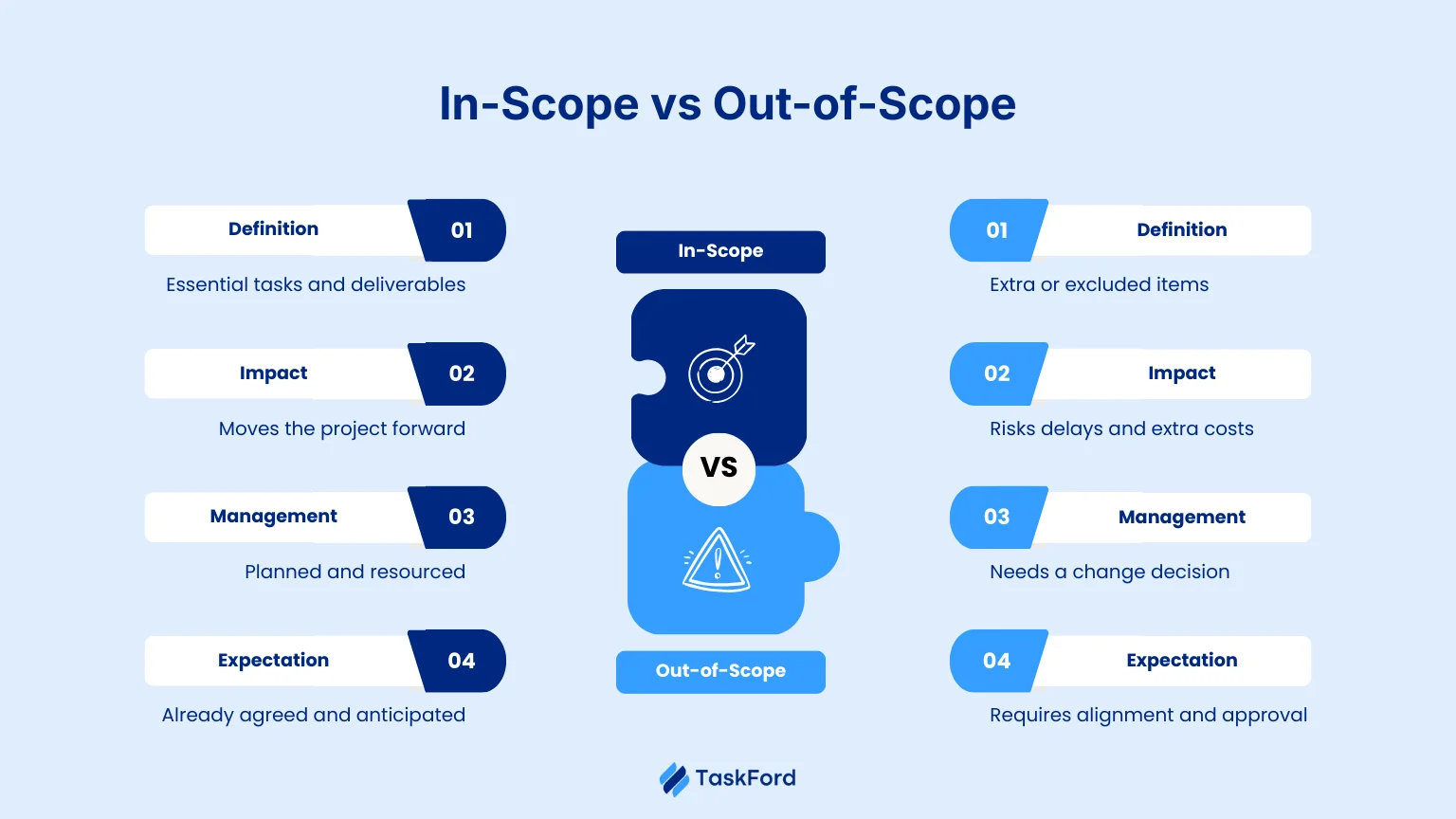
A common mistake is treating vague goals as if they are already part of the plan. Phrases like “make it better” or “improve performance” sound clear, but everyone understands them differently. Over time, these different interpretations become additional tasks that seem reasonable, simply because no one ever said they were out of scope.
When boundaries are unclear, every new idea starts to compete with the original plan. The project slowly grows, and rework becomes normal. Clear definitions stop that from happening. They turn assumptions into decisions and keep the work focused.
But knowing the difference is only the start. To prevent rework, teams need to understand how these small moments of uncertainty turn into real, costly problems.
The Dangers of Blurry Boundaries: Why Rework Happens
Rework rarely comes from one big change. It comes from many small ones. A quick tweak. A “Can we also add this?” A new idea that sounds simple. When there is no clear line around what the project includes, these small requests slowly change the shape of the work.
This is scope creep.
How Small Changes Turn Into Rework
When boundaries are unclear, every request feels reasonable. Teams say yes to be helpful. Stakeholders assume flexibility is part of the plan. Over time, work that was already finished has to be reopened.
- A new feature means redesigning approved screens
- A late requirement forces content to be rewritten
- A technical change requires code to be rebuilt
Each change seems minor. Together, they turn progress into backtracking.
The Real Cost
Unclear scope is one of the main reasons projects fall behind. Missed deadlines and budget overruns often start with the same issue: no one clearly defined what the project included. Teams plan based on one version of the work, then discover later that the expectations are much larger.
When that happens, timelines stretch, and costs increase. Work that once felt simple becomes harder to manage. What started as a clear plan turns into a moving target, and the team is left trying to catch up.
The impact shows up in everyday work:
- Designers redo screens that were already approved
- Developers revisit features marked “done”
- Project managers spend more time renegotiating than moving things forward
Each change seems small, but together they quietly drain time and energy.
Blurry boundaries also damage trust. Teams feel like the finish line keeps moving, no matter how hard they work. Stakeholders grow frustrated when dates change. Over time, confidence drops on both sides, and the project becomes defined by rework instead of progress.
Why It Keeps Happening
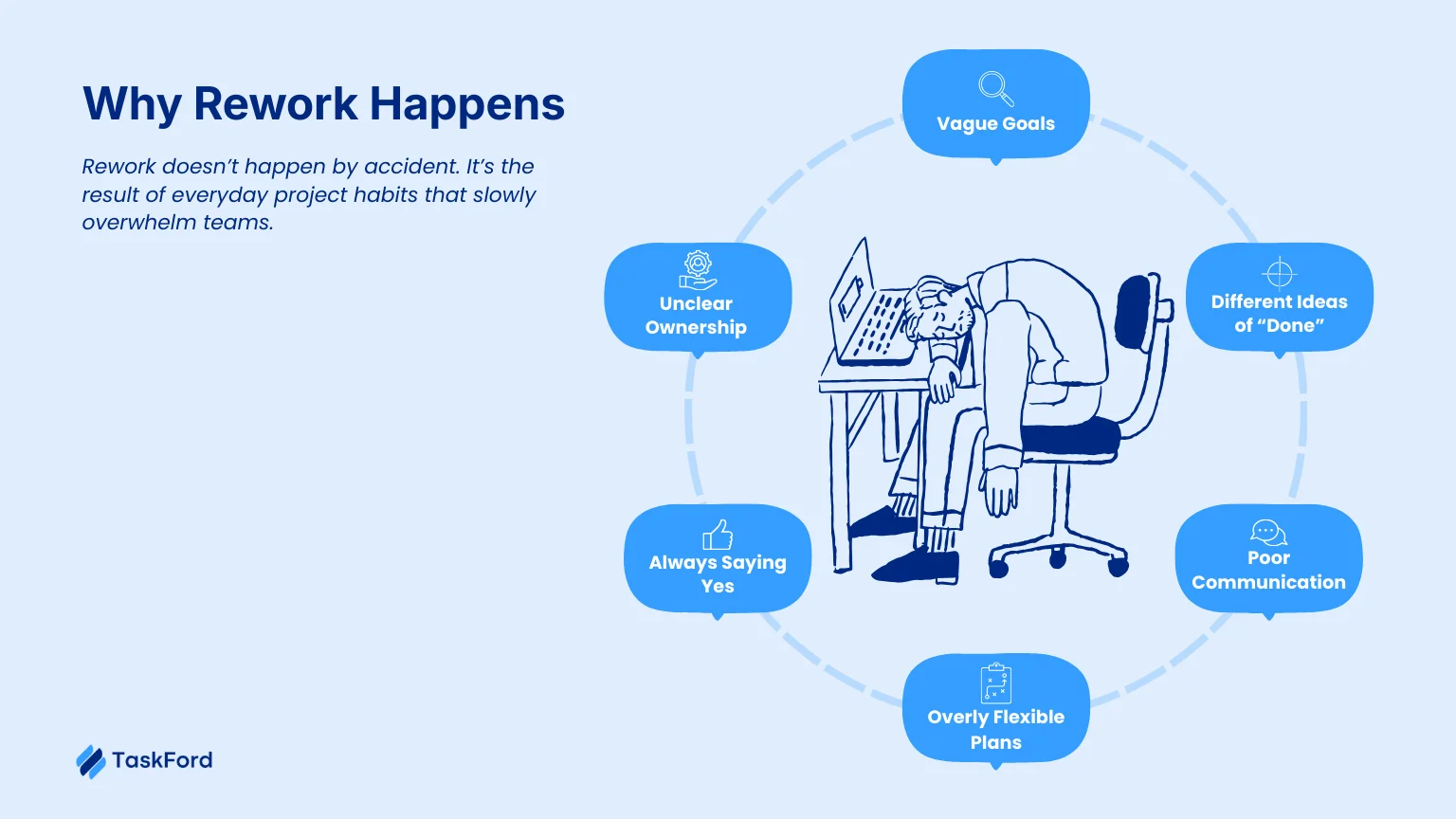
This pattern usually comes from:
- Vague goals
- Different ideas of what “done” means
- Poor communication
- Plans that are too flexible
- A habit of saying yes without pausing
- Unclear ownership of decisions
When these combine, scope becomes invisible, and rework becomes normal.
The good news is that this is preventable. With clear boundaries and a shared way to handle new requests, teams can protect progress without shutting down ideas. The next section shows how to do exactly that.
How Smart Teams Prevent Rework With Clear Boundaries
The difference between projects that stall and projects that deliver on time and value is not luck. It is how clearly teams decide what part of the project is and what is not. Smart teams treat scope as a core project constraint and manage it with intention, not as a box to check.
Industry research shows that when projects face challenges around time, cost, or delivery, scope management becomes one of the top priorities for project professionals. That focus exists for a reason. Clear boundaries are one of the most reliable ways to protect progress and avoid rework.
1. Start With Outcomes, Not Tasks
Before you list tasks, define what success looks like. Ask what problem the project is solving, what must be true when it is finished, and how success will be measured. Write these answers down and make them visible.
Outcomes create focus. “Redesign the website” is vague. “Launch a site that improves user clarity and reduces bounce rate by 20%” gives the team direction. Once outcomes are clear, every request can be tested against them. If it does not move the project toward that goal, it likely belongs outside the current scope.
2. Create a Clear Project Scope Statement
A project scope statement turns intent into agreement. It sets clear boundaries around the work and gives everyone a shared reference point. In simple terms, it spells out what the project will produce, what is part of this phase, and what is not.
At a minimum, include:
- What the project will deliver
- What is explicitly in-scope
- What is explicitly out-of-scope
That last part prevents most rework. A short “Not Included” list gives teams language to pause when new ideas appear and keeps expectations grounded in reality.
3. Align Everyone Before Work Begins
Do not assume people share the same expectations. Even when everyone agrees in a meeting, they may be picturing very different outcomes. Walk through the scope with stakeholders and invite questions. Ask whether anything feels unclear, missing, or risky.
Instead of a simple “Does this look good?”, prompt real discussion:
- “What do you think this project will deliver?”
- “What would make you feel disappointed at the end?”
- “What assumptions are we making that are not written down?”
What feels obvious to one person may be invisible to another. A designer may assume content is final. A stakeholder may assume new features are included. Surfacing these gaps early is far cheaper than fixing them later. Alignment turns hidden assumptions into visible decisions and keeps projects from drifting.
4. Treat Every New Request as a Decision
New ideas will appear. That is normal. What matters is how they are handled. When a request comes in, pause and ask whether it is in-scope or out-of-scope. If it is out of scope, make the impact visible by asking:
- Will this change the timeline?
- Will priorities need to shift?
- Will it require more resources?
- Should this move to a future phase instead?
These questions help teams make a clear decision, instead of letting a casual request quietly reshape the project.
5. Keep Scope Visible in Daily Work
Scope should not live in a forgotten document. For example, using project management software like TaskFord, with Gantt charts, task dependencies, resource capacity planning, and cost tracking all in one place, helps teams see what belongs in-scope and make informed decisions before extra work turns into rework.
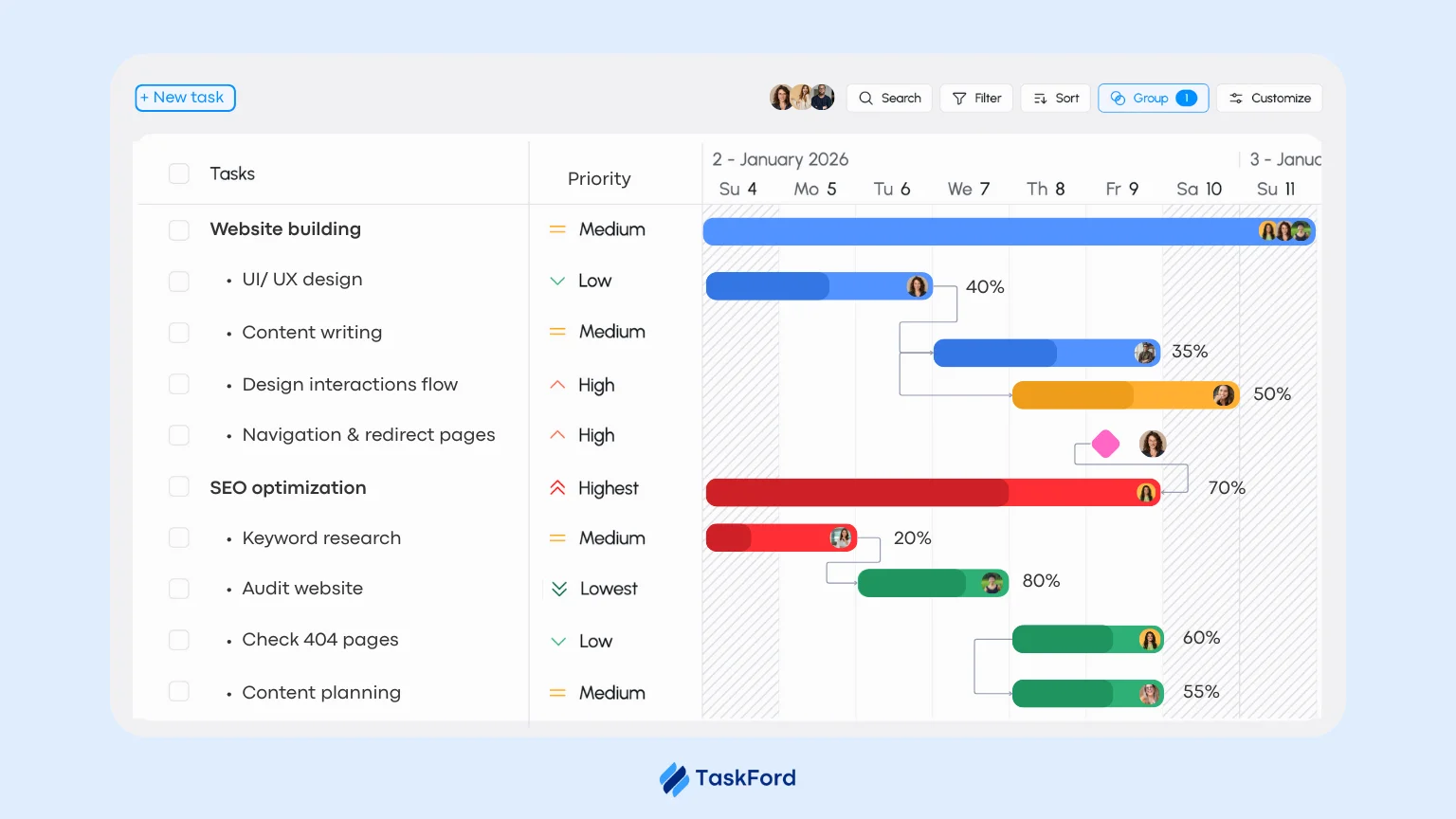
Boundaries only work when people can see them. Smart teams do not say no more often. They decide more intentionally. By making in-scope and out-of-scope visible at every stage, they protect progress and reduce rework.
Next, we will look at real examples of how these habits work in practice and what teams can learn from them.
What In-Scope vs Out-of-Scope Looks Like in Real Projects
The difference between smooth delivery and constant rework often comes down to one habit: pausing to decide whether new work is in-scope or out-of-scope.
In one product team, a mid-project request to add a new feature came in just as development was wrapping up. Instead of squeezing it in, the team classified it as out of scope and scheduled it for a future phase. They shipped on time, met their original goal, and built the feature properly later.
In another team, similar requests were accepted without discussion. Designs were reopened, copy was rewritten, and timelines stretched. What started as a clear campaign slowly lost shape. Eventually, the team had to pause and reset the project just to regain project scope control.
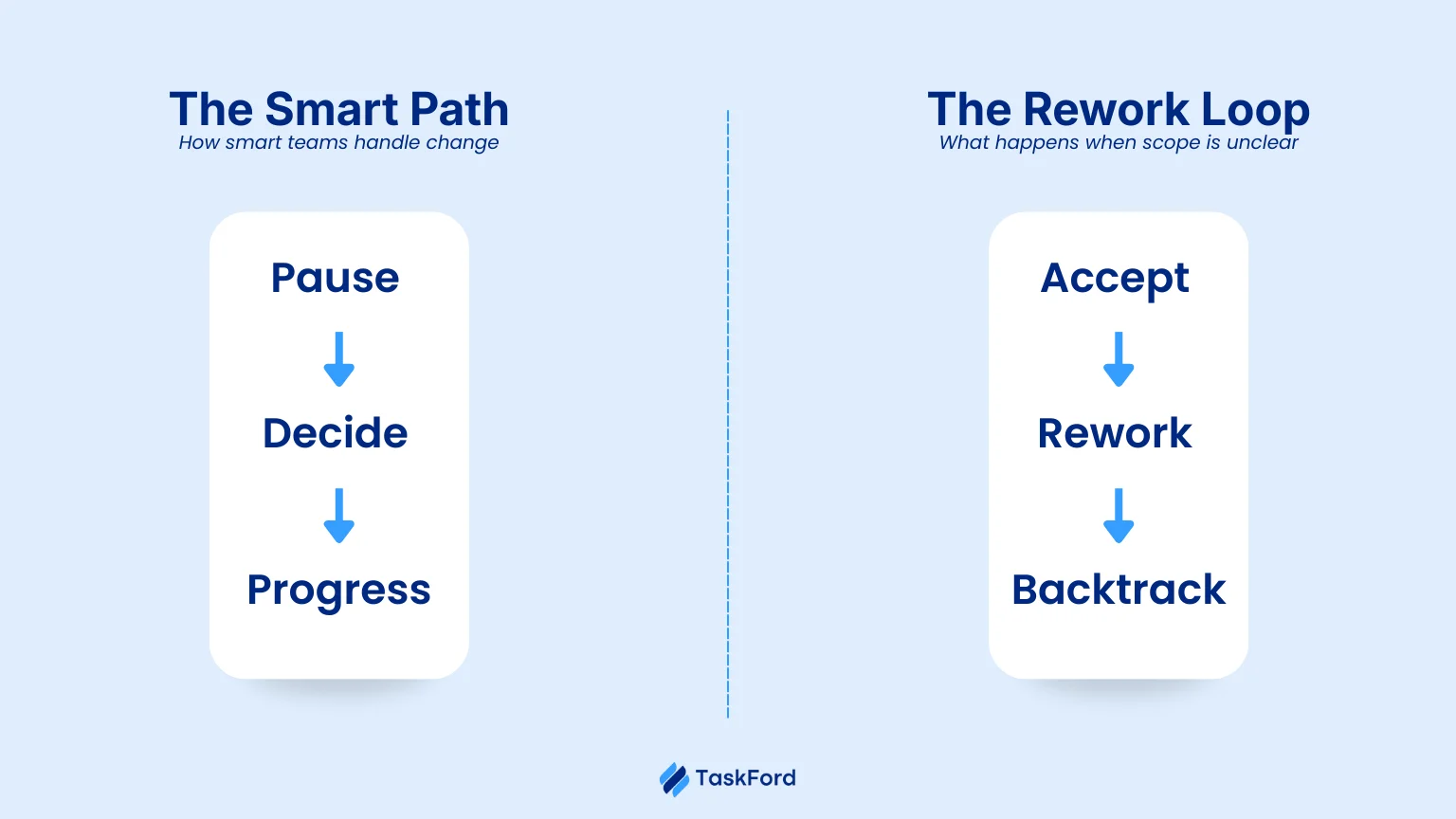
Both teams had good ideas and motivated stakeholders. The difference was not creativity or effort. It was whether new work became part of the plan by default or by decision.
That is the practical power of in-scope vs out-of-scope. It keeps projects moving forward instead of circling back.
Clear Boundaries Change Everything
Rework is rarely caused by weak execution. It happens when no one clearly defines where the work begins and ends. Without that line, every new idea competes with the original plan, and progress turns into revision.
In-scope vs out-of-scope gives teams a practical way to protect delivery pace. It creates a shared habit of pausing before acting, making change visible, and deciding with intent. The goal is not to stop ideas. It is to make sure they arrive at the right time, in the right phase, with the right impact.
Before your next project starts, take five minutes to answer two questions: What is in-scope? What is out-of-scope? That clarity does more than set expectations. It prevents rework before it begins.
Subscribe for Expert Tips
Unlock expert insights and stay ahead with TaskFord. Sign up now to receive valuable tips, strategies, and updates directly in your inbox.