One Early Delivery Risk Your Project Management Tool Misses
Early delivery risk hides behind busy progress and green dashboards. Discover the warning sign most project management tools miss and how teams can act earlier.
Your project dashboard says everything is on track, but your experience tells a different story. Teams are busy, meetings are frequent, and updates keep coming in, yet deadlines still feel fragile. You sense that something is off long before timelines turn red, but your tools give you no concrete evidence to act on. By the time issues become visible, options are already limited.
This is the core frustration behind many delivery failures. The problem is not effort, planning, or even execution discipline. It is the lack of early, reliable signals that show when work is quietly drifting off course. This article explores the earliest delivery risk most project management tools fail to reveal, the real problem, and how teams can detect it early.
What Is The Early Delivery Risk?
Early delivery risk is the period when a project is already drifting off course, but teams still believe delivery is safe.
Work is moving, updates look normal, and no deadlines have been missed yet. However, dependencies are unclear, decisions are pending, or progress is no longer reducing risk.
This is the most dangerous phase of delivery, because teams still have time to act — but no clear signal telling them they should.
The Real Problem Behind Delivery Risk
The core problem is false delivery confidence.
False delivery confidence happens when a team believes delivery is under control because work is moving, even though no one feels certain about the outcome. Tasks progress, activity is visible, and reports look healthy, yet confidence in delivery keeps dropping.
This is not a planning issue. It is not a motivation problem. It is a visibility problem. Teams track activity, but they cannot tell whether that activity is still safe. Progress becomes a poor measurement for certainty.
Over time, confidence stops coming from the system. It comes from conversations, gut checks, and constant alignment. That is when delivery becomes fragile. Thus, this is one of the biggest work delivery failures.
Early Delivery Risk Signs Teams Often Miss
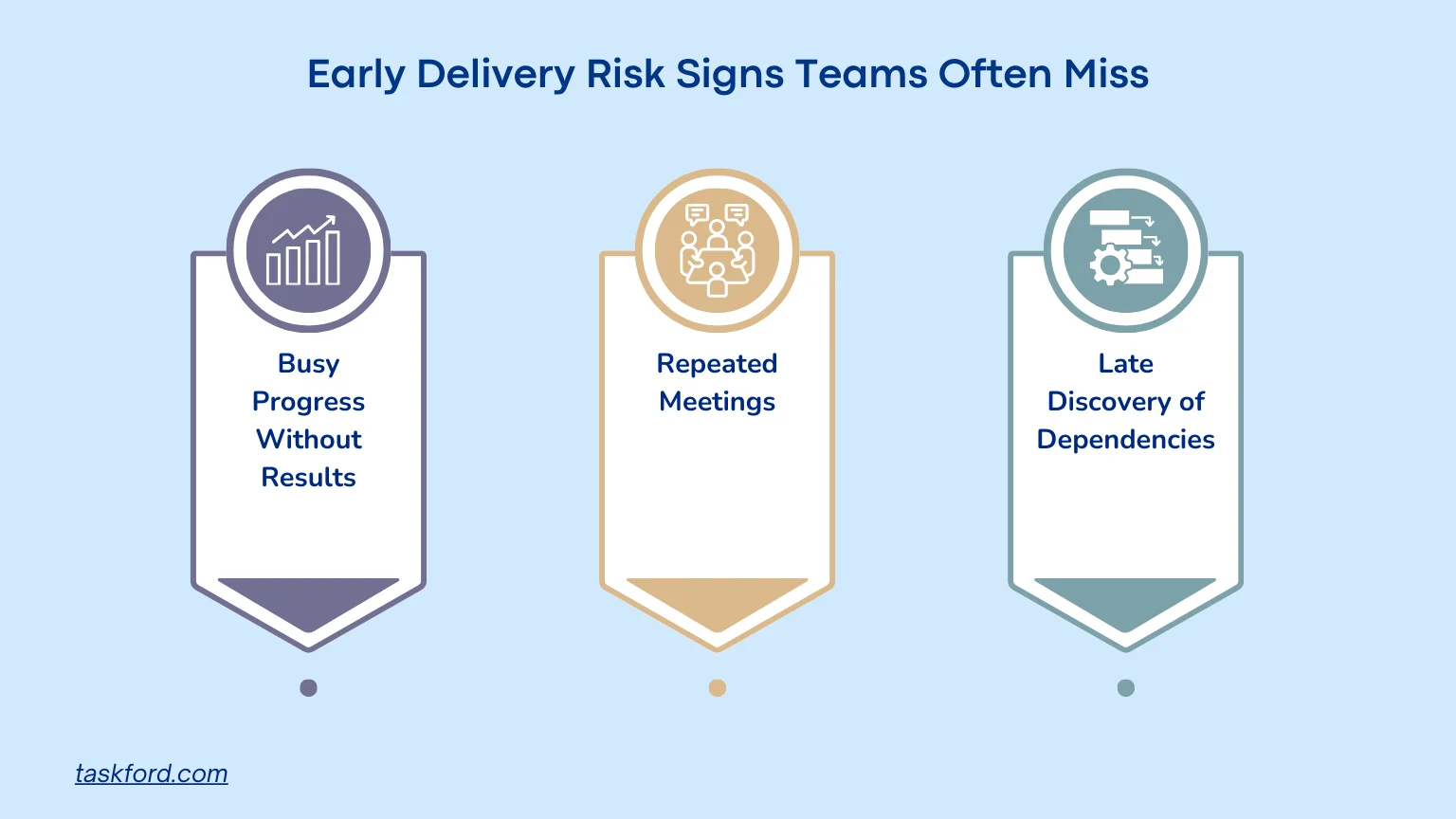
Delivery rarely collapses overnight. It becomes worse gradually, leaving signals along the way that are easy to overlook when visibility is fragmented.
Busy Progress Without Results
Teams stay active, but delivery does not move forward. Tasks change status, comments increase, and meetings fill the calendar, yet key milestones remain far away.
This usually happens when progress is tracked too broadly, hiding blocked work that nobody sees.
Repeated Meetings
When teams need frequent meetings just to understand who is working on what, it is a sign that clarity does not live in the work itself.
Late Discovery of Dependencies
Dependencies are rarely new problems. They existed earlier but were not visible. When teams only discover them under deadline pressure, they are forced to react quickly rather than adjust calmly.
The Risk of Waiting Until It Is Obvious
When false delivery confidence lasts too long, teams wait for clearer proof instead of acting early. That delay creates very real consequences.
What happens when teams wait too long:
- Fewer options to adjust scope, timing, or priorities
- Problems feel “manageable” until they suddenly are not
- Small delays stack up without being addressed
- Teams lose the chance to fix issues calmly
As pressure builds, teams begin to compensate rather than correct.
How teams react once it is obvious:
- Overtime becomes normal instead of exceptional
- Shortcuts are taken to protect deadlines
- Scope is cut late, often without proper discussion
- Decisions are made using outdated or incomplete information
By the time timelines finally turn red, prevention is no longer possible.
The real cost is more than delay:
- Confidence in the plan drops
- Trust in tools and reports erodes
- Teams stop believing early warnings next time
- Delivery becomes reactive instead of controlled
At that point, even strong teams can only limit the damage rather than change the outcome.
Why Most Project Management Tools Cannot Show This
Most project management tools are built to show movement, not delivery safety.
They answer questions like:
- What tasks were completed?
- Who owns what?
- How much activity happened?
They do not answer the critical question:
- Is this work still safe to deliver?
As long as tasks keep moving, dashboards stay green. Progress increases even when dependencies are unclear, decisions are pending, or follow-on work is blocked. Much of the real coordination happens outside the tool, so critical context never appears in reports.
The result is predictable. Tools create a false sense of safety. Work looks healthy on the surface while teams feel growing uncertainty underneath. By the time problems appear in the system, it is already too late to act early.
How Integrated Work Delivery Helps Prevent The Risk
Integrated Work Delivery shifts the focus from tracking activity to maintaining shared execution reality.
Instead of asking, “Are tasks done?”, it asks:
- Is work progressing in the right order?
- Are dependencies clear and current?
- Can decision-makers see risks as they form?
- Is collaboration happening where execution occurs?
By unifying work, progress, and communication, integrated work delivery reduces the delay between signal and response. Teams do not need to interpret scattered information. They can act on what they see.
How TaskFord Reduces False Delivery Confidence in Practice
TaskFord, an integrated work delivery platform, makes execution reality visible early. It exposes the signals that traditional tools delay or hide, so teams can act before confidence collapses.
See Delays Before They Become Problems
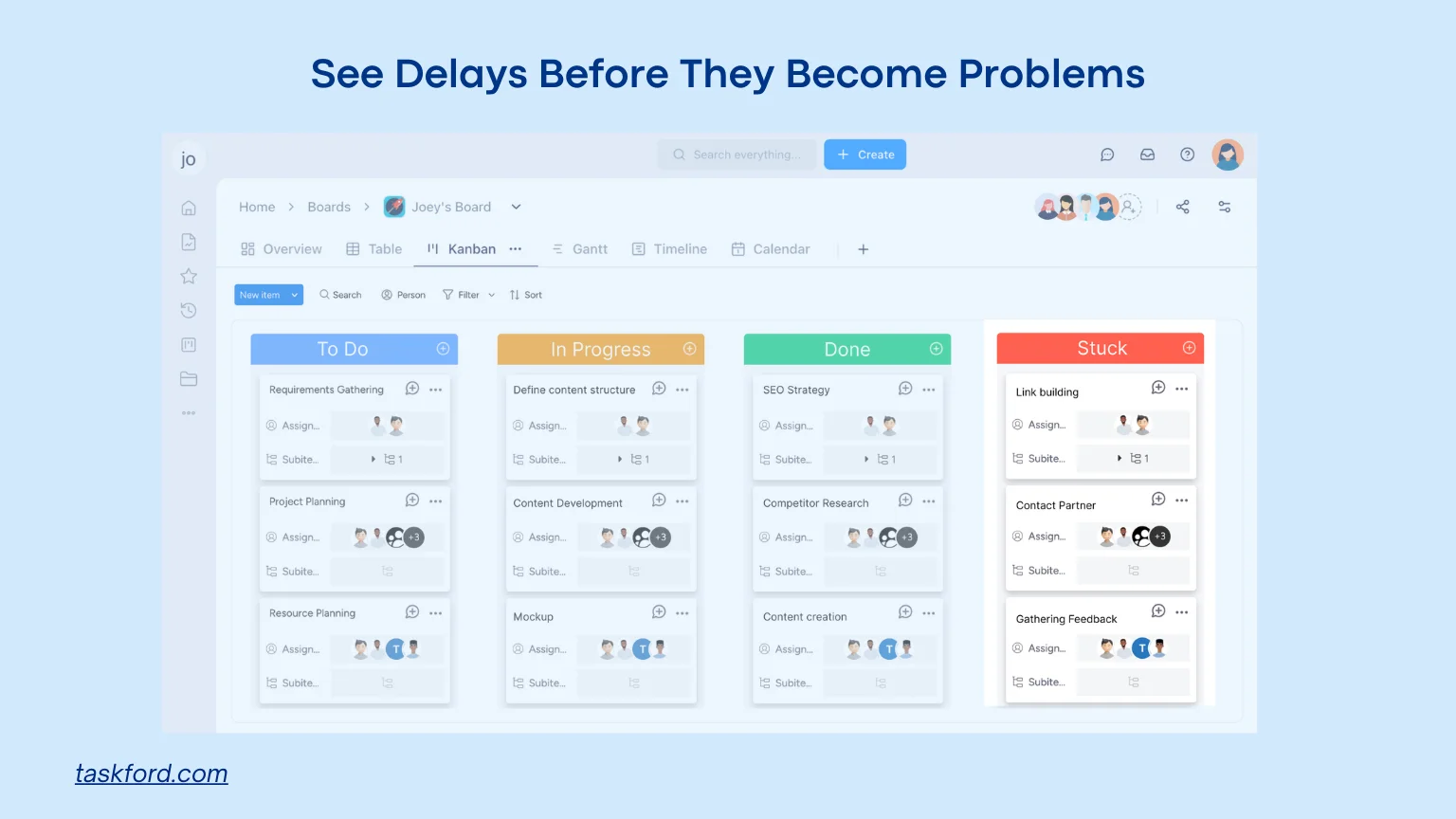
Benefit: Teams notice delivery risk early, while there is still time to adjust.
Supporting Features:
- Kanban Boards: Show work as it moves through stages, making blocked or slow tasks visible instead of hidden inside overall progress.
- Task-Level Status Tracking: Highlights when individual tasks stop moving, even if the project still appears active.
How This Helps: Instead of discovering delay through missed milestones, teams see work slowing at the task level. This allows them to unblock, reassign, or re-sequence work days or weeks earlier, before small stalls accumulate into schedule risk.
See Whether Progress Actually Moves Delivery Forward
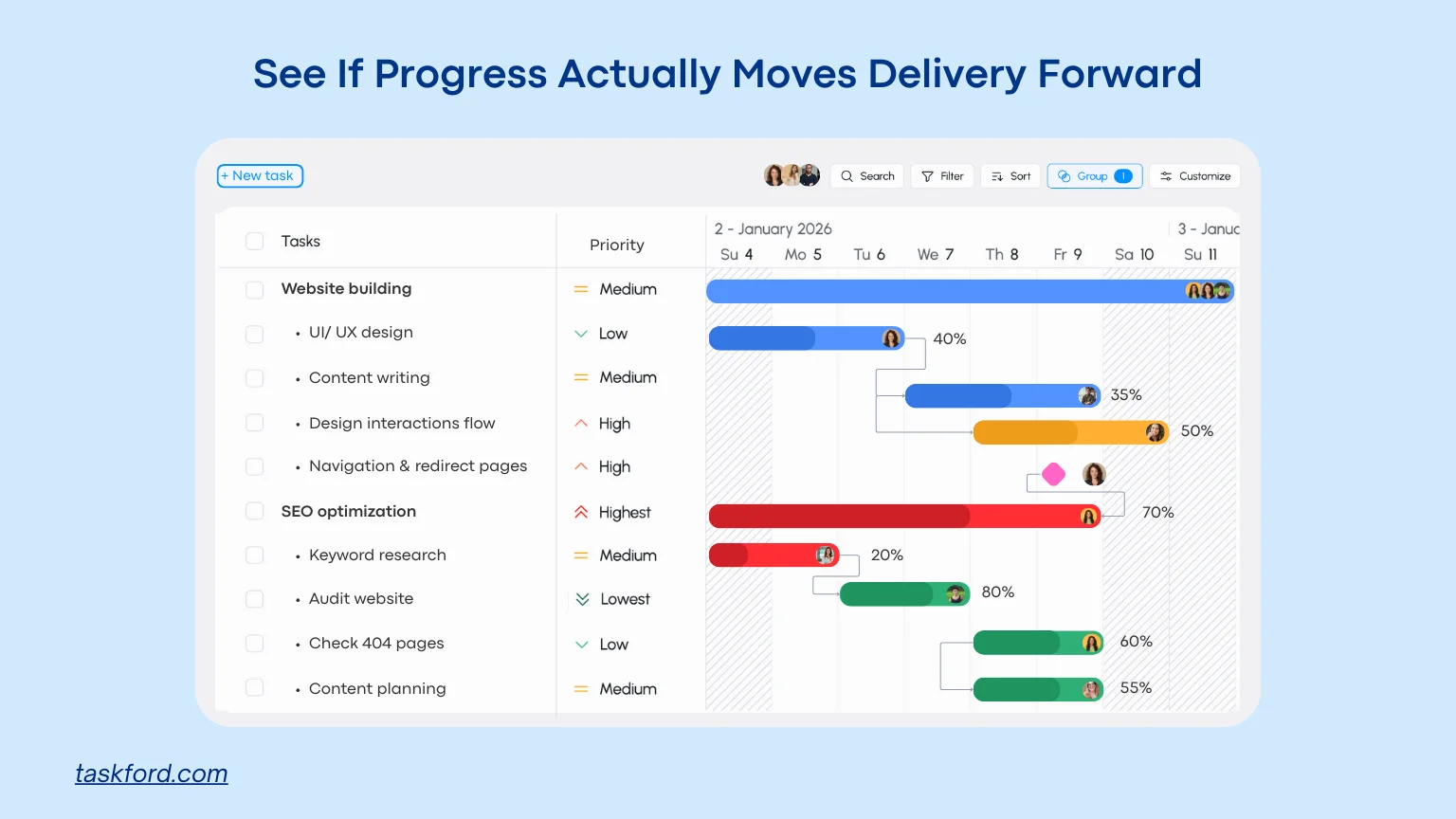
Benefit: Teams can tell whether current work is reducing delivery risk or only creating activity.
Supporting Features:
- Gantt Charts: Show how tasks connect to timelines, dependencies, and deadlines.
- Milestone Tracking: Makes it clear which tasks directly influence delivery commitments.
How This Helps: Teams stop assuming that “work done” equals “risk reduced.” When progress does not advance a milestone or clears no dependency, it becomes obvious early, allowing teams to redirect effort toward work that actually protects delivery dates.
Spot Overload Before Deadlines Slip
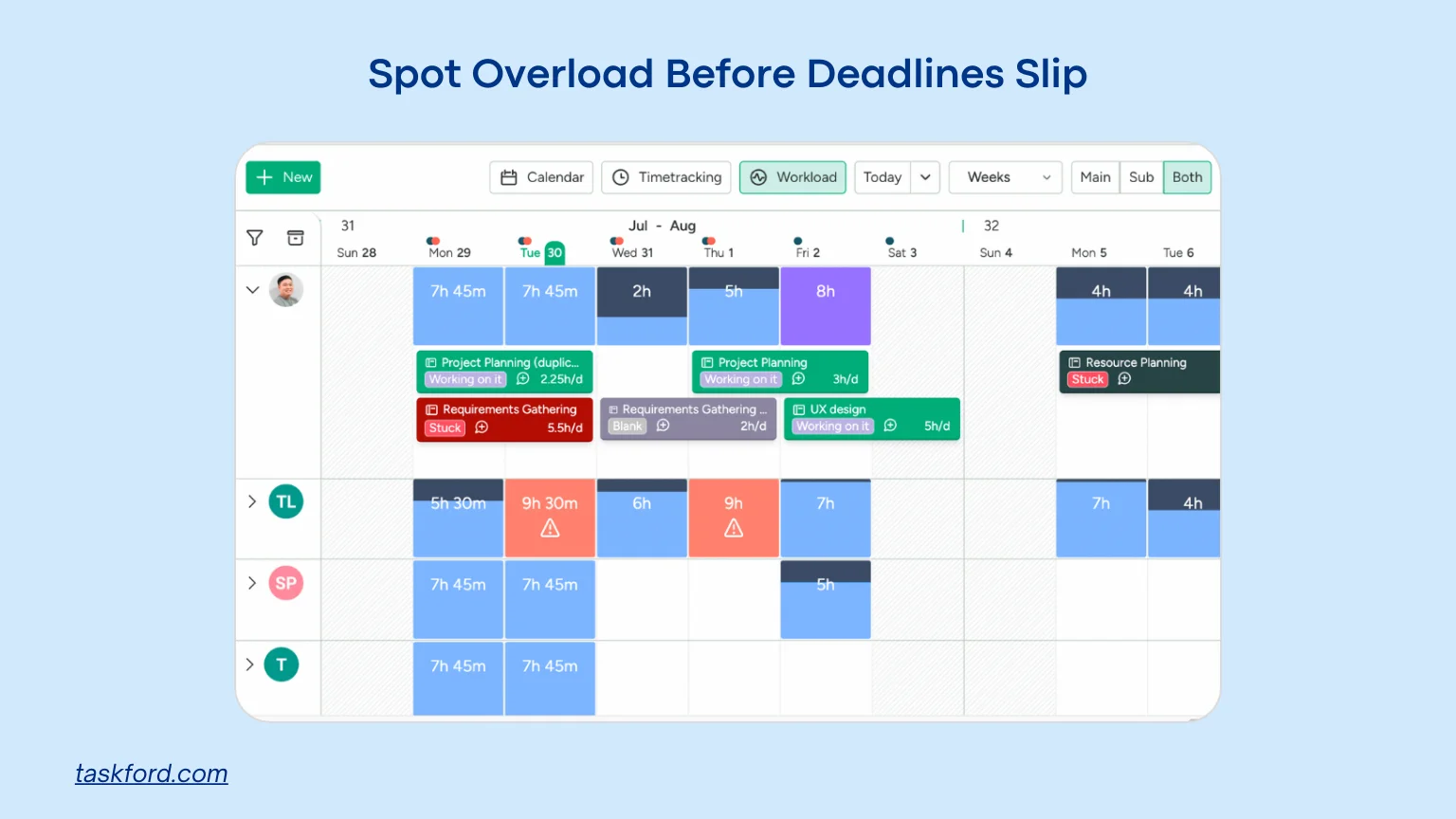
Benefit: Teams recognize capacity strain before it turns into delay.
Supporting Features:
- Resource Predictability: Displays how work is allocated across people and time.
- Workload Views: Reveal when individuals or roles are carrying more work than delivery allows.
How This Helps: False confidence often hides overloaded contributors until work slows unexpectedly. These views make strain visible while there is still time to rebalance work, adjust scope, or reset expectations without emergency measures.
Keep Everyone Aligned Without Extra Meetings
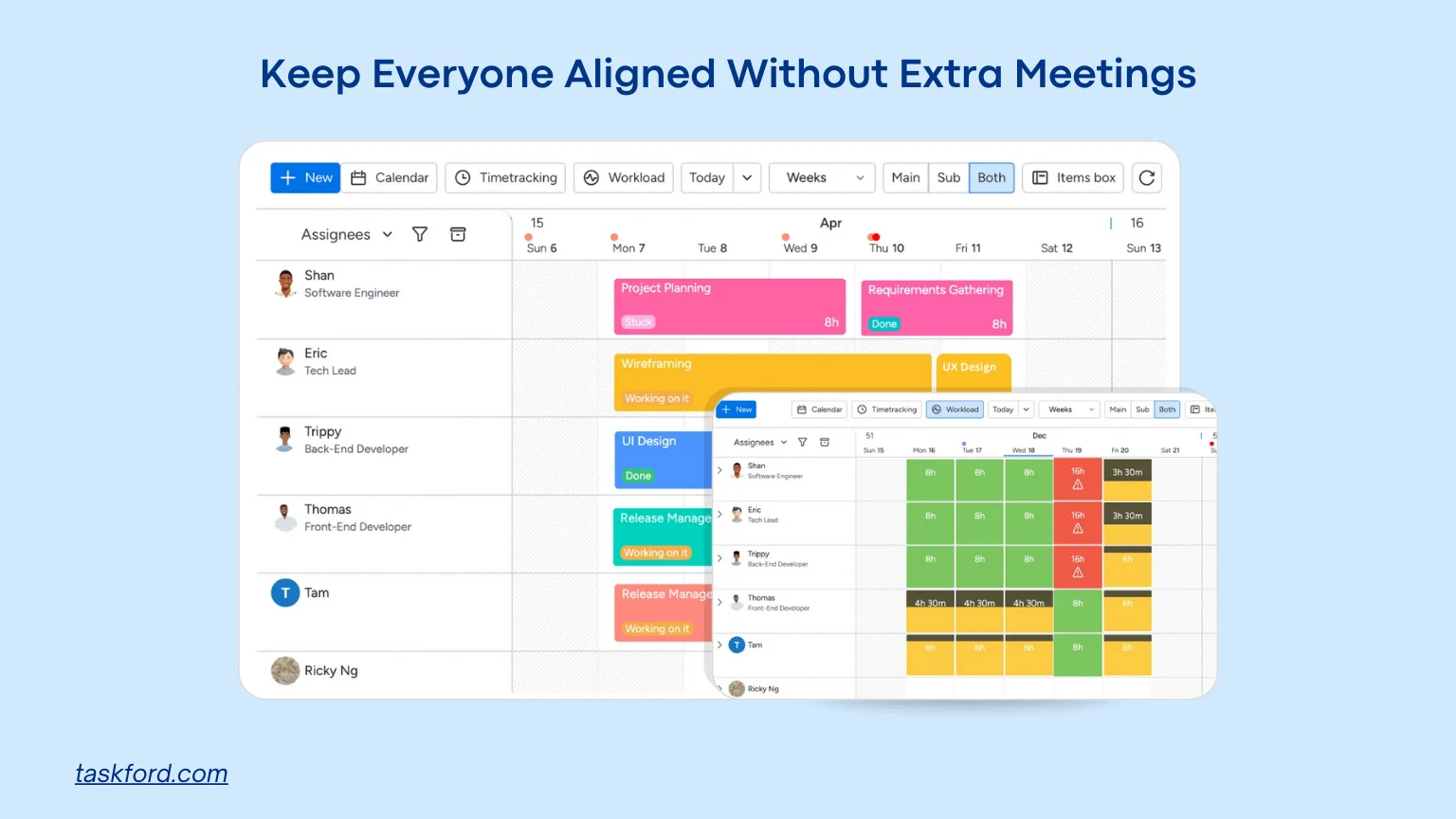
Benefit: Teams maintain a shared understanding of delivery status without constant clarification.
Supporting Features:
- Shared Boards: Provide one consistent view of workload, ownership, and progress.
- Real-Time Updates: Ensure execution status reflects current conditions, not last week’s report.
How This Helps: When alignment depends on meetings, confidence is fragile. With shared visibility, teams no longer rely on verbal confirmation to feel “on track.” Alignment becomes persistent, reducing the gap between perception and reality.
Make Decisions From Live Progress
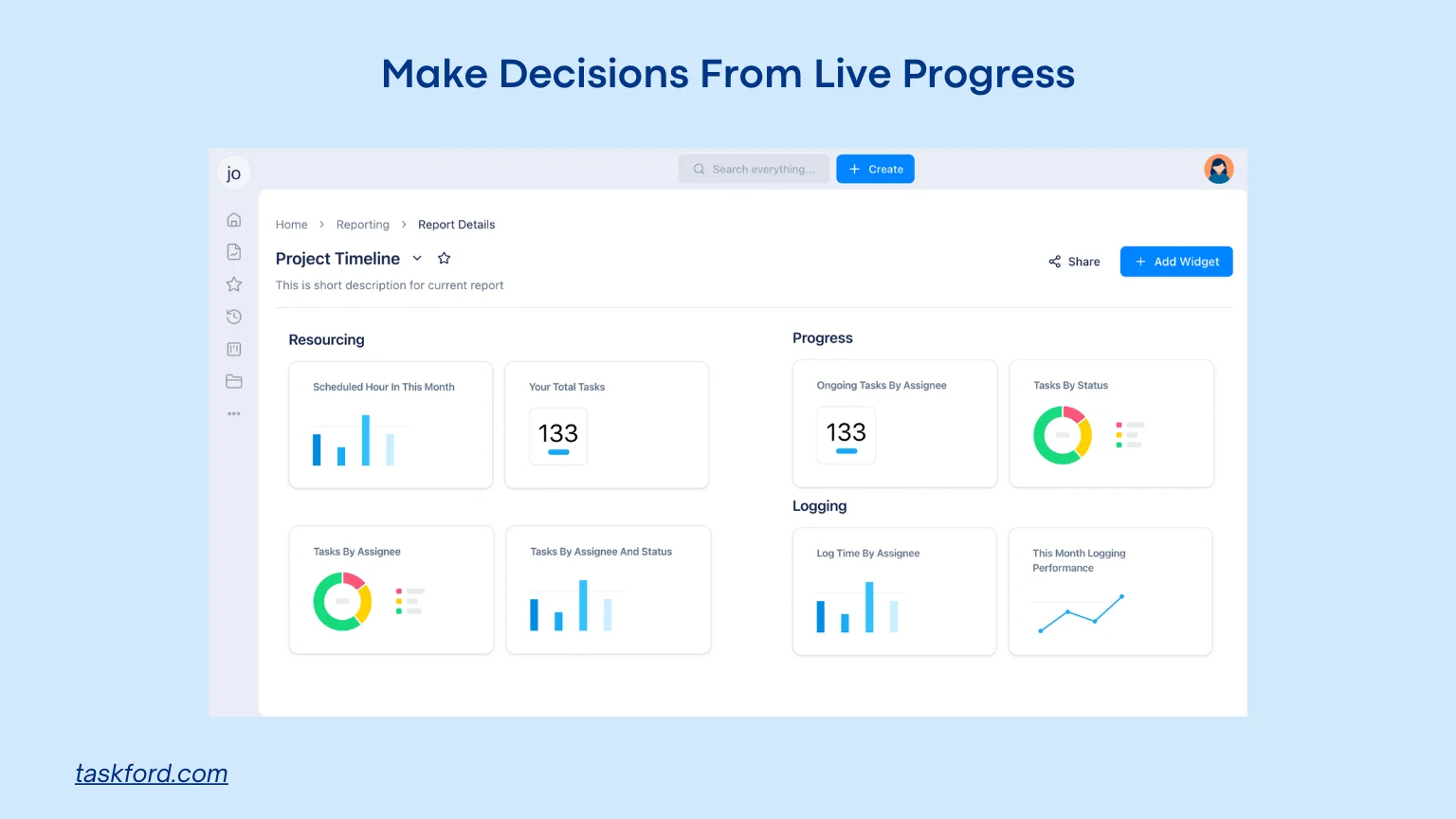
Benefit: Leaders intervene earlier, when trade-offs are still manageable.
Supporting Features:
- Dashboards: Surface progress slowdowns, delivery pressure, and workload imbalance in one place.
- Reports: Replace manual status summaries with signals drawn from live progress.
How This Helps: Instead of reacting to missed deadlines, leaders see pressure building in advance. This enables proactive decisions—adjusting scope, sequencing, or resources—before delivery confidence collapses into delay.
What Makes TaskFord Special
Most tools help teams organize work. TaskFord is built to expose whether that work is still safe to deliver. By keeping planning, execution, and visibility tightly connected, TaskFord reduces the gap between what teams see and what they feel. Confidence comes from shared execution reality, not from assumptions, status meetings, or delayed reports.
What Results Look Like When Teams Act Earlier
When delivery risk becomes visible early, the change is not abstract or theoretical. Teams begin to experience concrete, operational improvements across execution, decision-making, and accountability.
- Fewer Late-Stage Surprises: Risks surface while timelines are still flexible. Teams can adjust scope, sequencing, or resources before delays become unavoidable, reducing last-minute escalations.
- More Predictable Delivery Commitments: Plans are grounded in actual execution conditions rather than optimistic assumptions. As a result, delivery dates become more reliable and easier to defend with stakeholders.
- Shorter Feedback and Correction Cycles: Issues are identified closer to when they emerge, not weeks later. This lowers rework and feedback cycles, prevents delays, and keeps progress aligned with expectations.
- Stronger Cross-Team Trust: Shared visibility creates a common understanding of progress and constraints. Stakeholders no longer rely on assumptions or fragmented reports, which reduces friction and blame.
- Better Use of Leadership Attention: Managers focus on removing constraints and making decisions instead of chasing information. Intervention becomes targeted rather than reactive.
- Sustainable Delivery Pace: Early intervention prevents repeated crisis cycles. Teams maintain momentum without relying on overtime, last-minute heroics, or constant reprioritization.
Conclusion
Delivery problems rarely stem from a lack of commitment or capability. They arise when teams cannot see risk clearly enough, early enough, to respond effectively. When execution reality is fragmented, even experienced teams are forced into reactive patterns that erode outcomes and morale.
Integrated work delivery addresses this by shortening the distance between signal and action. With tools like TaskFord, teams do not eliminate complexity, but they regain control over it. Acting earlier becomes possible, decisions become grounded, and delivery shifts from constant recovery to deliberate progress.
Learn more
- Will AI Replace Project Managers? Separating Hype from Reality in 2025’s AI Project Management Landscape
- What is Project Management: A Beginner’s Comprehensive Guide 2025
- A Day in the Life of a Project Manager: How They Bring Projects to Life
Subscribe for Expert Tips
Unlock expert insights and stay ahead with TaskFord. Sign up now to receive valuable tips, strategies, and updates directly in your inbox.